
Is underfloor heating expensive to run? What it costs in Perth
The short answer
Not when it’s built right. On our model, hydronic floor heating on an air-source heat pump in a 200 m² Perth home costs about $240 a month through winter at Synergy’s July 2026 home rate, and the same floor built cheaply costs about $601 (both modelled estimates). By the hour, a well-designed 100 m² floor runs as low as about $0.46 and a badly built one as high as about $1.84. Built right, that puts floor heating in the same league as a good reverse-cycle air conditioner. Built cheaply, it can cost more to run than the aircon it was meant to replace.
Running cost is usually the second thing people ask us about, right after the price, and it’s the subject with the most wrong numbers floating around. You’ll see floor heating described as costing a dollar or two a day, as 75% cheaper than ducted air, or as close to free once the solar panels go on. None of those hold up in a Perth house at today’s power prices, and the first one used to sit on an old page of ours. Here are the numbers we stand behind, what they assume, and what moves them.
What does underfloor heating cost to run in Perth?
These are our modelled running costs for a month of the Perth heating season, which we take as May to September. They assume an air-source heat pump and Synergy’s A1 home tariff, which went to 33.26 cents a kilowatt-hour on 1 July 2026.
| Heated area | Built right | Built cheap | Gap over 20 winters |
|---|---|---|---|
| 150 m² | about $181 a month | about $451 a month | about $27,000 |
| 200 m² | about $240 a month | about $601 a month | about $36,100 |
| 250 m² | about $301 a month | about $752 a month | about $45,100 |
| 300 m² | about $361 a month | about $902 a month | about $54,100 |
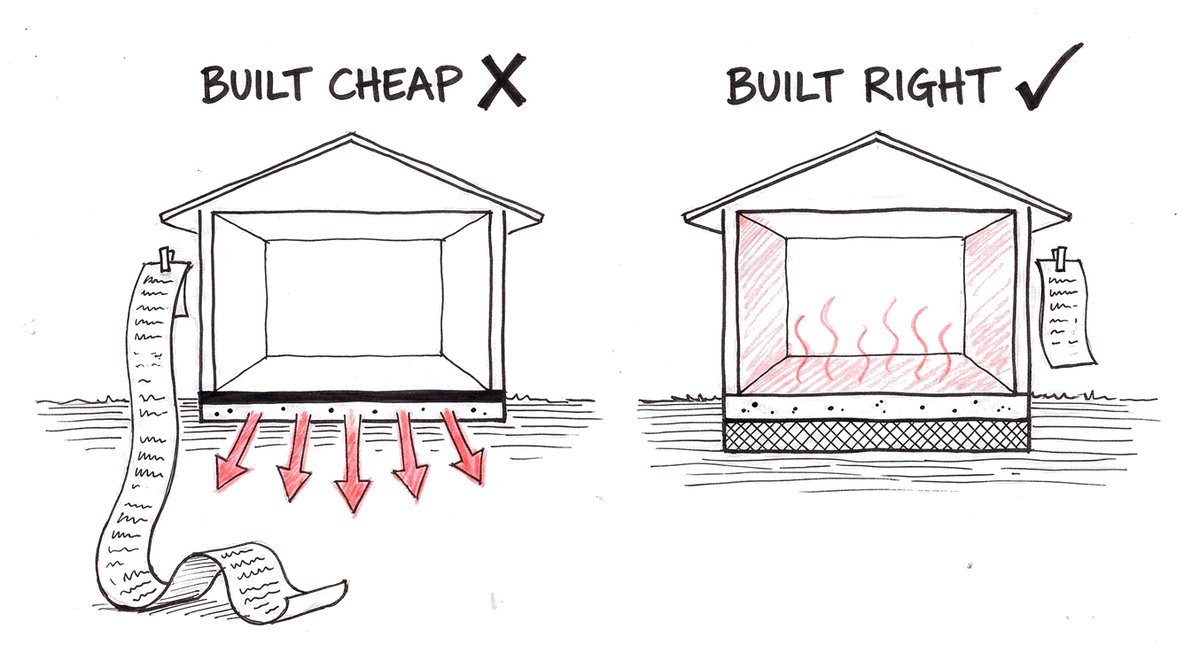
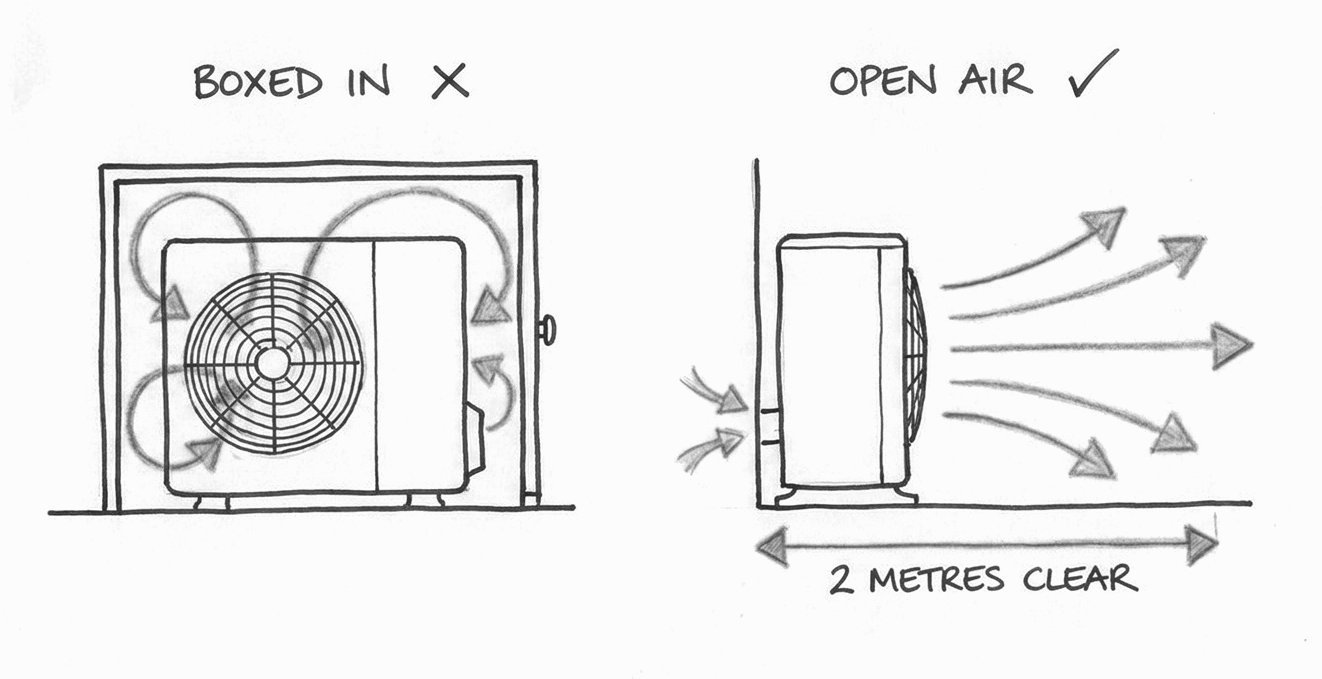
Built right means pipe in an insulated screed, insulation down the edge of the slab, every room sized to the heat it loses and a heat pump with room to breathe. Built cheap means pipe dropped into a slab with nothing under it or around its edge, which is the version most people get quoted, because it’s quicker to pour. All of these are modelled estimates, not promises: your house, your thermostat and next year’s tariff will move them. The Running Cost Calculator does the same sum for your own floor area.
What does it cost per hour?
If you’d rather think in hours, the same model puts a well-designed system on a 100 m² floor at as low as about $0.46 an hour. That’s the best case: an insulated screed, a good heat pump and a mild Perth winter day. At the other end, a badly built suspended slab (a concrete floor with open air or a room underneath it) with no insulation under it or at its edges, and the heat pump pushed hot to make up for it, runs as high as about $1.84 an hour for the same warmth. That’s up to four times as much.
Run either one for eight hours a day through a month and the 100 m² floor comes to about $110 against about $440, again modelled estimates. Four things decide where your house lands: how much heat the building loses, how well the system is designed and installed, what makes the heat, and what you pay for power. Three of those are settled before the slab is poured.
Why can the same floor cost two and a half times as much to run?
Because heat travels to wherever it’s coldest, and under a Perth slab that’s the ground. Pipe laid in a slab with nothing under it warms the room and the sand below at the same time, and in the worst cases up to 70% of the heat you pay for goes down and sideways instead of up. Perth’s sand doesn’t help, because it carries heat away many times faster than insulation board does. The insulation under the heated layer and down the slab edge is the biggest single reason a built-right floor costs so much less.
Then there are the smaller leaks. A thermal bridge, where the warm slab runs out to a cold alfresco, a path or the edge of a pool, can double or triple the bill on its own. A heat pump squeezed behind a fence ends up breathing its own cold air and can lose up to half its efficiency.
The temperature of the water matters more than most people expect, too. Phil’s example is a good heat pump on a well-designed floor delivering about five units of heat for each unit of electricity while it makes 35 degree water, and only about two and a half when it’s pushed to 55. Same machine, twice the electricity for the same warmth.
Phil’s way of summing it up is that the whole system is only as good as its weakest link. A premium heat pump on a badly built floor runs no better than a cheap one, and that’s the floor people end up switching off after a winter or two.
Is it cheaper to run than reverse-cycle air conditioning?
About the same, if it’s built right, and we’d rather tell you that straight. A reverse-cycle air conditioner is a heat pump too, and a good one is a cheap way to heat a room. What floor heating adds is the kind of warmth: a warm floor under bare feet, heat that stays down where you sit instead of gathering under the ceiling, no blown air and no noise. Because most of that warmth reaches you by radiation, many people find they’re comfortable at a lower setting than they’d use with the aircon. We go through the trade-offs in floor heating or ducted reverse-cycle.
Two other comparisons come up. Electric floor heating, the mats or cables under the tiles, turns each unit of electricity into a little less than one unit of heat, and across a whole house Phil reckons it costs two to five times more per hour to run than a hydronic floor on a heat pump. For one small bathroom it’s still the sensible choice, as we explain in electric or hydronic floor heating.
As for gas, we install gas boilers as well as heat pumps, but in Perth a heat pump usually comes out ahead on running cost, so it’s what we suggest first. If you’d rather have gas, we’ll design for it and show you its running cost next to the heat pump’s.
 6 min
6 min
My bills seem high. How do I know if my system is using too much?
If you already have floor heating and the winter bills feel wrong, you can do a rough check from your own bills. Take a winter bill and a summer bill from the same year, and the difference is mostly heating. Work it out per month and put it next to the calculator’s two columns for your heated floor area. Near the built-right number, the system is doing its job. At or above the built-cheap number, heat is going somewhere it shouldn’t.
Some causes can’t be fixed without lifting the floor, like a slab with nothing under it. Others can. A heat pump hemmed in by a fence can often be given room. A controller sending water into the floor at 45 or 50 degrees is worth a look, because Phil’s view is that a properly designed floor runs on 30 to 35, and he treats anything hotter as a red flag. A thermostat hidden in a cupboard, or one that reads the floor instead of the room, makes the system run when it doesn’t need to.
And sometimes the leak isn’t the heating at all. We were asked to look at a beachfront house in Dunsborough where the summer power bill for hot water alone was over $700 a month, with the heating off. A loop of hot-water pipe ran around the house day and night so the taps ran hot straight away, and where it went through concrete and walls it had no insulation on it.
The water left at 50 degrees and came back at 40 with no tap open, and an electric element topped it up around the clock. Re-piping a finished house wasn’t realistic, so the pump went on a timer. We do look at systems other people installed, depending on the system, and finding where the heat goes is usually the first job.
Other questions people ask us
Does it cost more to leave floor heating on all day?
Running it for longer uses more power than running it for less, but a floor isn’t meant to be switched on and off like an air conditioner. A good system is set on a timer for the cold months and tops the floor up as the house needs it, without running flat out. How long it takes to come up to temperature depends on how the floor is built, as we explain in how long floor heating takes to warm up.
Will solar panels make it free to run?
No, though they help. Phil’s point is that the heat is needed in the mornings and evenings, when the sun isn’t doing much. A heat pump can put some midday power into the floor and the floor gives part of it back later, and Synergy’s Midday Saver plan makes power between 9am and 3pm much cheaper than in the evening. We cover that in running floor heating on cheap midday power.
Why have I seen much lower running costs quoted?
Our own old pages had some, including the dollar or two a day, and we took them down because we couldn’t stand behind them. On our model, a built-right 200 m² floor comes to about $8 a day in a winter month, and even a 100 m² floor at its best runs to about $3.70 a day over eight hours (both modelled estimates). A dollar or two buys two to four hours of that best case, not a winter’s day. The numbers here come from the same physics as our 5 Mistakes guide, worked through a Perth heating season at Synergy’s current rate. We also show the built-cheap column next to the built-right one, because that’s the one a lot of houses end up with.
Where to go from here
If you’re building in Perth or the south-west, the 5-minute quote gives you your options in writing within 3 working days, each with its price and a modelled running cost for your house, and you don’t need final plans to start. If you’d like to see your own two numbers first, the Running Cost Calculator takes about a minute, and if you already have a quote in hand, the Quote Comparison Decoder shows what it leaves out that would move the bill.