
Does floor heating work in rooms with high ceilings and big windows?
The short answer
Yes, and it’s one of the best ways to heat a tall room. A split system or ducted unit heats the air, and warm air rises, so under a high ceiling much of the heat collects where nobody sits. A heated floor warms you mostly by radiation, the way winter sun does, so the warmth stays down where you are. Big windows are the part that needs care: glass loses heat quickly and sends cold air down its face, so the design has to put more warmth along the glass, and a room that’s mostly glass may need some help on the coldest mornings.
Raked ceilings, a double-height living room and a wall of glass facing the garden are what a lot of Perth homes are designed around now, and they’re lovely for ten months of the year. Then July arrives and the room that looked so good on the plans is the hardest one in the house to keep warm. If you’re designing or building one of these rooms, the heating choice matters more than usual.
Why are tall rooms so hard to heat with air?
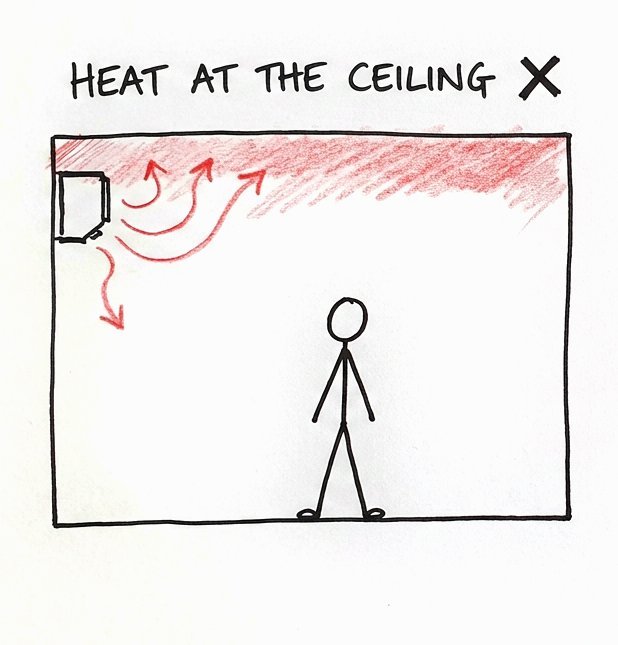
Because warm air rises, and a high ceiling gives it plenty of room to go. Most Perth ducted systems blow warm air in from the ceiling and draw it back out from the ceiling too, so a lot of it goes round in a loop up near the top and never reaches you. In a tall room you can stand under a layer of warm air with cold feet, and the usual response is to turn the thermostat up.
Phil describes the other half of the problem, which most people have felt: the thermostat says 25, even 28, and you still feel cold. The air is warm, but the walls, the floor and the glass are cold, and your body keeps losing heat to them. Warm air alone can’t fix that, which is why air-heated tall rooms tend to feel draughty and expensive at the same time.
Why does a warm floor suit a tall room?
Because it heats you and the room’s surfaces directly. Between 50% and 60% of the heat your body trades with a room goes by radiation, the same way winter sun warms your face on a cold, still day. A heated floor is a big, gentle radiator under your feet, and as it warms the furniture and the lower walls, they start giving warmth back too. Phil’s phrase for it is that everything becomes a heat emitter.
Some of the heat does warm the air, and that air still rises, but it’s a small share. Phil’s experience with two-storey homes is that only a small amount of a downstairs floor’s heat ever makes its way upstairs, and the same goes for the space under a tall ceiling. What you feel is the warmth in the bottom couple of metres, where you actually live. People heated this way are often comfortable at a lower setting: in an 1895 Fremantle house we heat with radiators, the owner sets 19 degrees and finds it perfectly warm.
 4 min
What do big windows change?
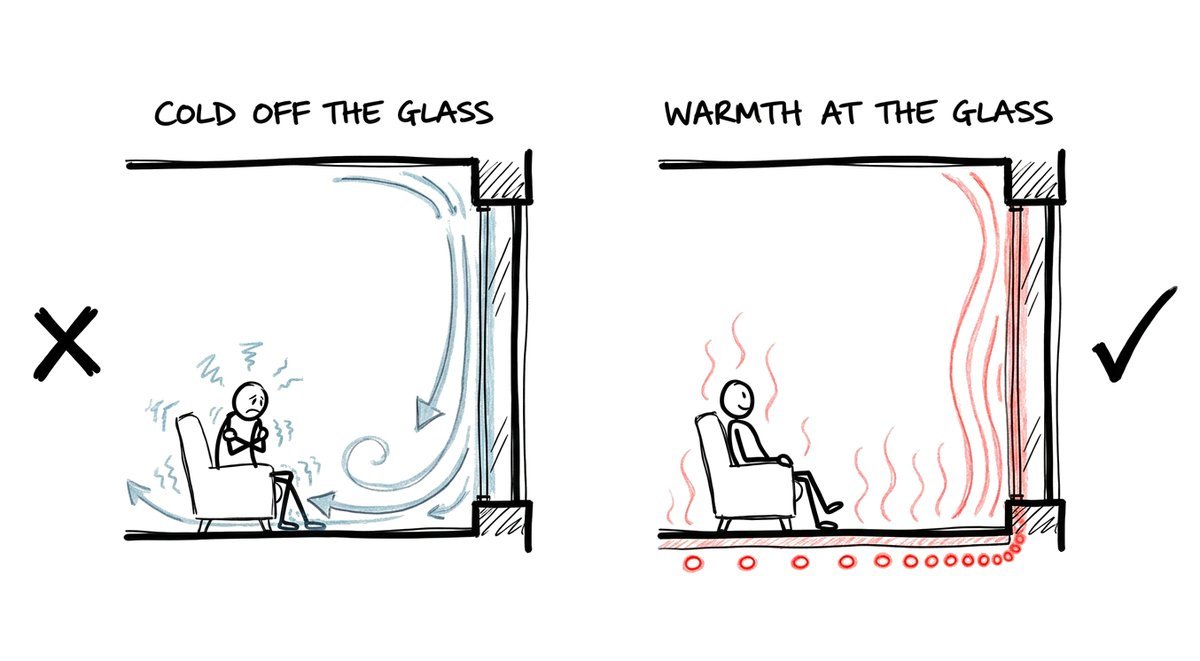
Glass is the coldest surface in a winter room, and it causes two kinds of chill. The air touching it cools, gets heavier and slides down the glass, then spreads across the floor as a draught you feel at your ankles. And you lose heat to the cold glass by radiation, which is why the chair next to a big window feels colder than the one across the room, even when the air is the same.
The answer starts with a heat-load calculation for each room, which counts how much glass it has, which way the glass faces and how high the ceiling is. Along a big window we lay the pipes closer together, so warmth rises up the face of the glass and the cold air never gets going. Good glazing and heavy curtains or blinds at night help too, and in a glassy room they’re worth deciding at the same time as the heating.
Perth adds one more thing. North-facing glass lets in a lot of winter sun, and sun on a polished concrete floor is free heat. A floor that responds quickly, like a heated screed that starts warming the room in 15 to 30 minutes, can step back when the sun arrives, and a thermostat that senses the room rather than the floor knows when to do it. A slow, heavy slab tends to keep heating into a sunny afternoon.
Can a floor keep up in a room that’s mostly glass?
Usually, but not always. A floor can only give out so much heat before it feels too warm underfoot, so we design floor heating under tiles and concrete to a limit of about 80 watts per square metre. In most rooms that’s plenty. In a room where most of the walls are glass, the calculation sometimes shows the floor can’t cover the coldest mornings on its own.
When that happens there are honest choices. Better glass reduces the heat the room needs. A small top-up can also run from the same heat pump: the heated floor does the steady work, and ducted air conditioning on the same machine adds a little extra heat when it’s needed and helps with the cooling in summer. What we won’t do is promise a glass box will be cosy at the window if the numbers say it won’t.
Other questions people ask us
Does a high ceiling cost more to heat with floor heating?
A little more than a low one, because there’s more wall and glass for heat to escape through. It’s far less of a penalty than with air heating, because the warmth stays low instead of filling the space under the ceiling first.
What about cooling a tall room?
In summer the height helps, because hot air rises out of the way. Floor cooling can only cover about a quarter of what a Perth house needs on a hot day, so most homes pair it with air conditioning, as we explain in combining floor heating with air conditioning.
I have an older home with high ceilings. Is floor heating an option?
Only if the floors are coming up anyway. Radiators give the same radiant warmth from the wall and suit tall old rooms well, because they don’t fill the ceiling with warm air that leaks into the roof. Our page on heating an existing home has the short version.
Will a ceiling fan help?
With air heating, a fan on its slow winter setting can push some of the warm air back down. With a heated floor there’s much less warm air up there to recover, so you’ll rarely need it.
Where to go from here
If you’re building in Perth or the south-west, the 5-minute quote gives you your options in writing within 3 working days, each with its price and a modelled running cost, and you don’t need final plans to start. Mention the tall rooms and big glass in your notes. If you’re an architect working on one of these houses, our page for architects covers what we need from the drawings, and our article on heat-load calculations shows how each room is sized.