
Electric or hydronic floor heating: which costs less to run?
The short answer
Hydronic, by a wide margin, once you’re heating more than a bathroom. Electric cables turn each unit of electricity into one unit of heat. A heat pump feeding a hydronic floor turns it into about three, so the same warmth costs roughly a third as much to run. At Synergy’s home rate of 33.26 cents a kilowatt-hour, that’s about 34 cents for each unit of heat from cables against about 11 cents from a heat pump. For one small bathroom, though, electric is the honest answer: it’s far cheaper to put in, and it only runs for short spells.
If you’ve priced an electric mat for a bathroom, a quote for whole-house hydronic heating can look absurd next to it. Phil hears it often: why pay more for hydronic when electric floor heating goes in for about half the price? He agrees with the price. The difference shows up afterwards, on every power bill for as long as you live in the house.
Why does electric floor heating cost more to run?
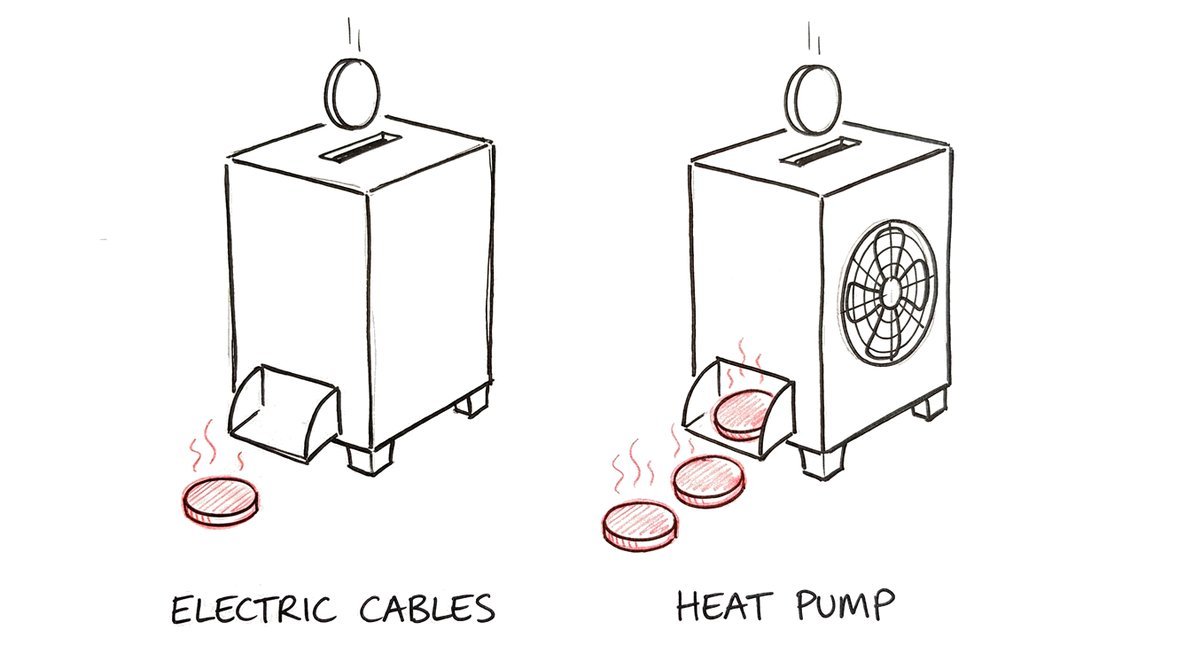
Electric floor heating is a kettle element spread out under the tiles. Electricity runs through a resistance wire, the wire gets hot, and you get back almost exactly what you paid for: about 0.99 units of heat for every unit of electricity. Nothing that turns electricity straight into heat can do better, and free solar power doesn’t change the ratio.
A heat pump doesn’t make heat from electricity. It uses electricity to collect heat from the outside air, even cold air, and move it into water, the way a fridge moves heat out of its cabinet. A heat pump running a floor gives you about three to four units of heat for every unit of electricity, a little more on a mild day and a little less on a cold morning. That warm water then runs through pipes under the floor.
Phil explains it with two machines. Put a dollar coin into the electric one and you get a little less than a dollar’s worth of heat back. Put the same coin into the hydronic one and you get about three dollars’ worth. At Synergy’s home tariff from July 2026, that’s the difference between about 34 cents and about 11 cents for the same unit of warmth.
What that means across a whole house
For one bathroom on for an hour, those cents barely matter. Across a house they add up quickly. Phil works it through for a house that needs 20 kilowatts of heat on a cold morning. With a heat pump making about five units of heat for each unit of power, which a good one can manage on a well-designed floor running cool water, about 4 kilowatts goes in: roughly what two plug-in oil heaters draw.
So the whole house is warmed for the power two plug-in heaters would use in two rooms. Electric cables need the full 20 kilowatts, which can mean upgrading the power supply to the house before the heating is even switched on.
Then comes the first winter bill. Phil’s experience is blunt: “people don’t use the electric floor heating after the first billing cycle because they get a bill shock”. A heating system nobody can afford to turn on is the most expensive kind there is.
For a sense of scale, our modelled estimate for a well-built hydronic floor on an air-source heat pump in a 200 m² Perth home is about $240 a winter month, at Synergy’s July 2026 rate. Electric cables would need roughly three times the electricity to put the same warmth into that floor. Our Running Cost Calculator shows the hydronic figures for your own floor area.
 6 min
Does electric floor heating feel the same?
Not quite. Electric mats are usually thin and sized to warm a small floor fast, so they often run the surface hotter, with a sensor in the floor switching them off before the tiles get too hot to stand on. In a small bathroom that’s fine. In a big, cold living area the floor sensor can cut the heat before the room has reached the temperature you asked for, so the room never quite gets there.
A hydronic floor runs on warm water, around 40 degrees at most and often well below, spread across the whole floor. The surface stays gently warm rather than hot, and the heat comes steadily instead of in bursts. It’s the same kind of warmth, just spread wider and run cooler.
When is electric the right choice?
When the heated area is small. For a bathroom, an ensuite or any heated area under about 35 square metres, electric is usually the better buy, and Phil says so himself: if he were heating just a small bathroom in his own house, he’d go electric. A bathroom floor runs for an hour in the morning and a little longer in the evening, so the higher running cost stays small, while a hydronic system for one room would mean buying a heat pump sized for far more than the job.
The bathroom mat is cheap because it’s a small job: a mat under the tiles, a thermostat on the wall and an electrician to connect it. That price is fair for what it does. It just doesn’t scale, because the running cost grows with every square metre and every hour the cables are on. We go through the bathroom-only question in heating the whole house or just parts of it.
If you’re putting hydronic heating through the rest of the house, the bathrooms normally just go on the same system. Now and then an isolated upstairs bathroom gets an electric mat instead, where that suits the project better.
Can solar panels close the gap?
Solar helps both, but it helps the heat pump three times as much. A unit of free solar power through electric cables is still one unit of heat; through a heat pump it’s about three. And in winter you need heat early in the morning and in the evening, when the panels are making little or nothing. We cover what solar can and can’t do in can rooftop solar power my floor heating.
Other questions people ask us
Is electric floor heating cheaper to install?
Yes, often by about half for the same floor. For one small room that saving wins. For a whole house, the running cost catches up with the difference, and keeps going.
What does hydronic floor heating cost to run in Perth?
Our modelled estimates for a 200 m² home are about $240 a winter month built right and about $601 built cheaply, at Synergy’s July 2026 rate. How it’s built matters as much as the heat source. The full table is in what floor heating costs to run.
Is hydronic cheaper to run than reverse-cycle air conditioning?
Both are heat pumps, so per unit of heat they’re close. Built right, a hydronic floor runs in the same league as a good reverse-cycle system. Its advantages are comfort: warmth at floor level, no blown air and no noise in the room.
Does hydronic heating need a heat pump?
No. A gas boiler can heat the water too, and we install both. On running cost a heat pump usually comes out ahead in Perth, so it’s what we suggest first, but if you’d rather have gas we’ll design and install a gas boiler.
Where to go from here
If you’re building or renovating in Perth or the south-west, the 5-minute quote gives you your options in writing within 3 working days, each with its price and a modelled running cost, and you don’t need plans to start. If all you want is one warm bathroom floor, an electric mat is the simple answer. For anything bigger, the Running Cost Calculator shows what a well-built hydronic floor costs to run in your home.