
Underfloor cooling vs air con: can floor cooling replace air conditioning in a Perth summer?
The short answer
No. In Perth, floor cooling can do about a quarter of the cooling a standard house needs. On a 30 degree day it takes roughly one and a half degrees off inside, quietly and cheaply, but on a 35 degree afternoon you’ll still want air conditioning. Underfloor cooling does work, and it earns its place alongside air con rather than instead of it: the floor does the gentle background work, and the air conditioning comes on only when the house gets too hot or too humid.
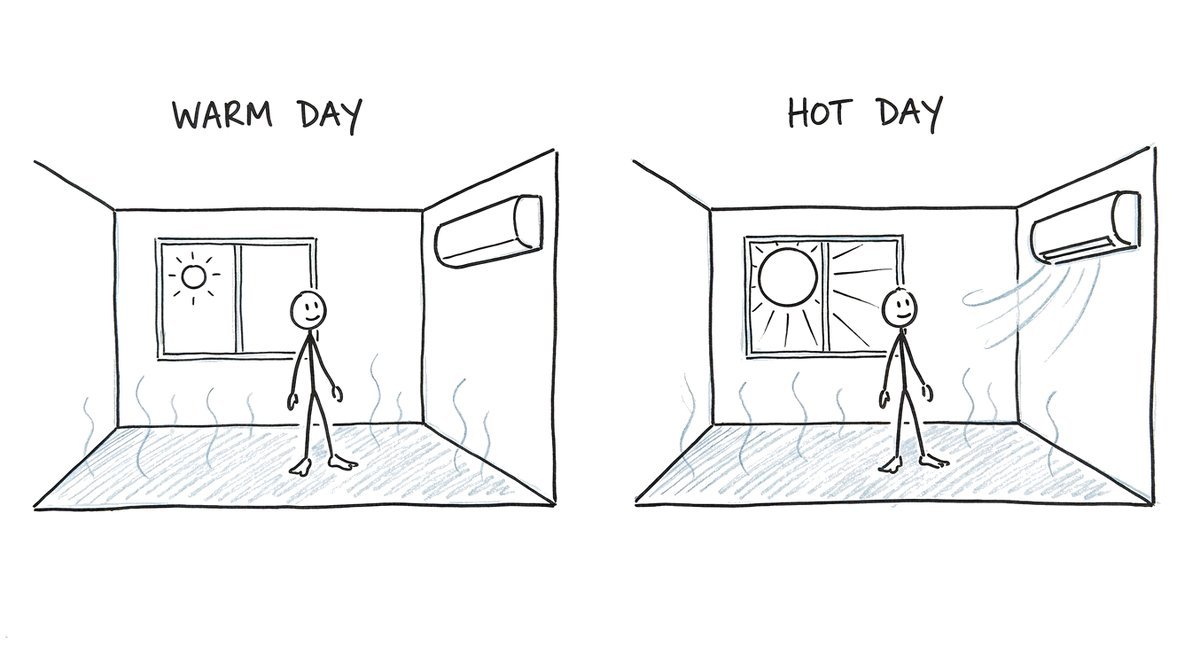
It’s a natural thought once you’ve decided on floor heating. The pipes are going into the floor anyway, so why not run cold water through them in summer and skip the air conditioner? Phil’s video on floor cooling is one of the most watched on our channel, which tells you how many people have had the same idea. The honest answer is a mix of good news and physics.
How does underfloor cooling work?
It’s the same system as floor heating, run the other way. In winter a heat pump sends warm water through the pipes under the floor. In summer the same heat pump makes cool water instead, and the floor becomes a large, slightly cool surface that soaks up heat from the room and from you.
The water is only gently cool. On one of our Dalkeith jobs, the water going to the floor is blended to around 18 degrees, depending on how humid it is inside, while the air conditioning on the same system gets water at about 10. Touch a cooled floor and it feels pleasantly cool underfoot, nothing like a cold tile in July. Most of the effect comes the way warmth comes from a heated floor, by radiation: your body gives off heat to the cooler surface around it, so you feel comfortable without any air blowing on you.
Why can’t floor cooling replace air conditioning?
Phil’s answer, standing on a cooled floor in a Cottesloe house, is the one we give everyone: “floor cooling can only provide, in Perth, about a quarter of the cooling output that’s typically required for the standard house design and level of thermal insulation that we’re used to.” Three things hold it back.
Cool air sinks, so the cool layer stays down near the floor while the warm air sits above it. The floor also can’t be made much colder, because below a certain temperature, called the dew point, moisture in the air starts to settle on it like water on a cold drink. And part of what makes a summer day feel hot is moisture in the air, which a floor can’t remove. An air conditioner wrings water out of the air as it cools it. A floor kept safely above the dew point can’t.
Then there’s the way we build. Perth houses have big windows and glass doors, and a west-facing wall of glass on a February afternoon lets in far more heat than a cool floor can take back out. So on a 30 degree day the floor might take roughly one and a half degrees off the inside temperature. On a 35 degree day it won’t be enough on its own.
So is it worth having?
If you’re already putting in hydronic floor heating, it often is. The pipes are in the floor anyway, and floor cooling does its share of the work efficiently. Because it runs on water that’s only a little cooler than the room, the heat pump has an easy job making it, much easier than making the very cold water or refrigerant an air conditioner needs. Most summer days in Perth don’t call for the full output of an air conditioner, so the floor gets a lot of useful hours.
The other reason is comfort. There’s no cold air blowing on the back of your neck, nothing drying out your eyes, and no fan noise. If you’ve always found air conditioning a bit harsh, that’s the difference you’ll feel.
If you aren’t putting in floor heating, we wouldn’t lay pipes in the floor just to cool it. A good reverse-cycle air conditioner is the cheaper way to cool a house, and floor cooling on its own would leave you short on every hot day. Thick carpet is another reason to think twice, because it acts like a blanket over a cool floor just as it does over a warm one.
How floor cooling and air conditioning work together
The best setup we build has one heat pump making cool water for both. The floor cooling runs first and does the steady background work. The air conditioning side uses the same parts as ordinary ducted air con, a fan coil unit with ducts and grilles in the rooms, except it’s fed with chilled water from the same heat pump instead of its own outdoor unit. The fan coils come out a little bigger than a standard unit, and the grilles can sit wherever the architect wants them.
One control system watches both. On the Cottesloe job in Phil’s video, it knows when the floor is keeping up and the air conditioning can stay off, and it turns the air conditioning on automatically when the house gets too warm or the air gets too humid. On a mild day you might not hear it at all. On a 38 degree afternoon both are working. Our page on whole-home systems explains how heating, cooling and hot water are designed as one job.
 3 min
What to ask before you decide
Ask how the system deals with the dew point. A floor cooled without regard to the humidity can end up wet, and the way an installer avoids that decides how much cooling you actually get. We explain the options in will floor cooling make my floors wet.
Ask what does the cooling on a 38 degree day. If the answer is the floor alone, keep asking. And ask whether the floor and the air conditioning share one heat pump and one set of controls, or are two separate systems that don’t know about each other. Two separate systems can’t share the work sensibly, because neither knows what the other is doing. If you’re still weighing the two up, floor heating and air conditioning in the same house goes through the combinations.
Other questions people ask us about floor cooling
Is underfloor cooling cheaper to run than air conditioning?
For the share of the cooling it does, it usually costs less, because the heat pump only has to make water a little cooler than the room. It can’t do all the cooling, though, so the fair comparison is air conditioning alone against floor cooling plus air conditioning. We model that for your house rather than promise a figure.
Is underfloor air conditioning the same thing?
Not quite. Some people use the phrase for ducted air conditioning with its outlets in the floor, which still blows cooled air into the room. Floor cooling blows nothing: cool water runs through pipes in the floor, and the floor itself does the work.
Can I add cooling to the floor heating I already have?
Often, if the heat source can make cool water and the controls can watch the humidity. A gas boiler can’t make cool water, so a system on gas would need a heat pump for the cooling side.
Does floor cooling work with timber or carpet?
Hard floors work best, because tiles and polished concrete pass heat through easily. Timber works with less output. Thick carpet with underlay cuts the cooling down a lot, the same way it cuts floor heating.
Where to go from here
If you’re building in Perth or the south-west, the 5-minute quote gives you your options in writing within 3 working days, each with its price and a modelled running cost, and you don’t need plans to start. Mention floor cooling in your notes so we include it. If you’d rather read first, our page on heat pumps explains the one machine that does the heating, the cooling and often the hot water as well.