
Does a 7-star home still need heating?
The short answer
Yes, but less of it. Since 1 May 2025, new homes in WA have had to meet the NCC 2022 energy rules, which set the shell’s thermal performance at the equivalent of 7 stars. A 7-star house loses heat more slowly, so it needs a smaller heating system and costs less to keep warm, and a gentle, low-temperature system like a heated floor on a heat pump suits it well. What the rating doesn’t change is a Perth July morning: the house still cools overnight, and a tiled or polished-concrete floor still feels cold underfoot.
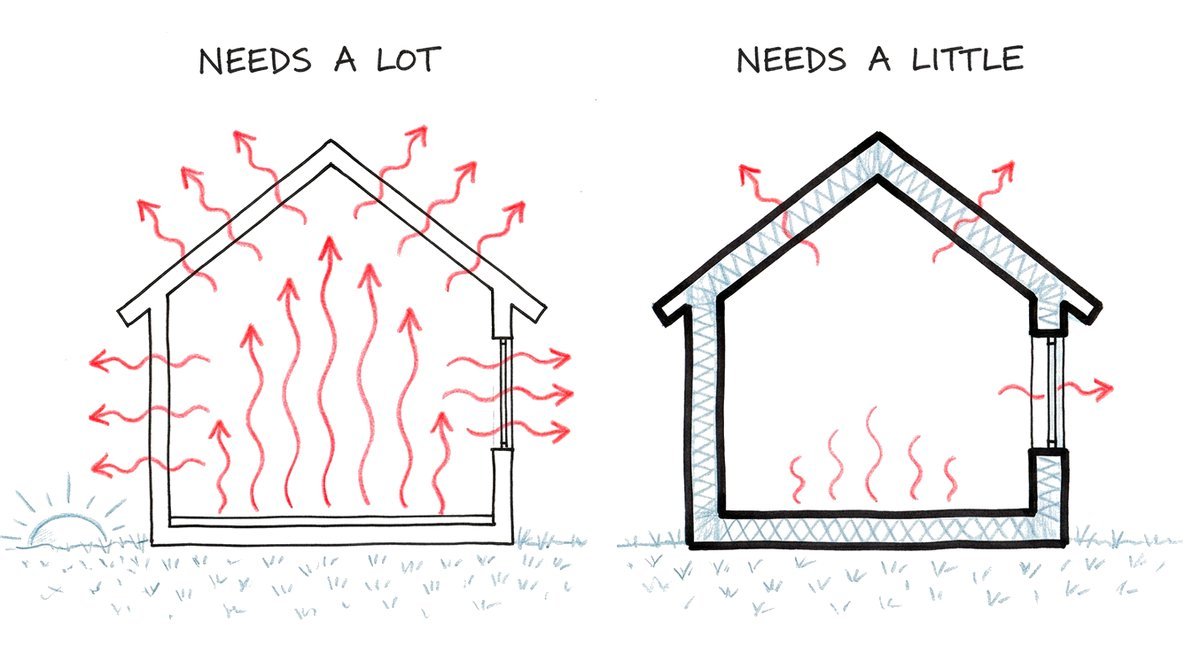
It’s a fair question. The new code makes houses far better at holding heat, and it’s natural to wonder whether heating is still worth the money. On plenty of winter days a 7-star home will look after itself, warmed by the sun coming through its north-facing glass. The question is what happens on the mornings when there’s no sun to help, and what the floor feels like when you get out of bed.
What does a 7-star rating actually measure?
The stars come from NatHERS, the Nationwide House Energy Rating Scheme. An assessor models the house on a computer, with its walls, roof, windows, floor, shading and the way it faces, in your climate. The model works out how much heating and cooling the house would need over a year to stay comfortable and turns that into a score out of ten stars. More stars means a shell that needs less.
WA has applied the NCC 2022 housing energy rules since 1 May 2025, and they set the minimum at the equivalent of 7 stars. Two things are easy to miss. The rating is about the shell, not the heater, so two 7-star houses can have completely different heating. And it’s a yearly total. It tells you how much heating the house needs across a whole year, not whether it’s comfortable at six o’clock on the coldest morning in July.
Why does a well-insulated house still get cold on a July morning?
Because insulation slows heat down; it doesn’t stop it. Phil puts it the way an engineer would: “insulation doesn’t stop energy, it merely slows it down”. A 7-star house is a better thermos. Coffee in a good thermos stays hot far longer than in a mug, but by the next morning it’s lukewarm, and the thermos never made it hot in the first place.
A Perth winter night is long. The Bureau of Meteorology’s Perth station averages 8.1 degrees overnight in July, and on 25 July 2025 Mt Lawley got down to 0.3 degrees. From dinner to breakfast that’s twelve hours or more with no sun, and even a well-sealed house keeps losing heat through every window, wall and ceiling the whole time. It loses it more slowly than an older house, so the morning is less of a shock, but it’s still the coldest part of the day indoors.
Why does the floor still feel cold?
Most new Perth homes sit on a concrete slab with tiles or polished concrete on top, and a star rating doesn’t change what you stand on. A hard floor pulls warmth out of bare feet far faster than carpet or timber, so it feels cold even when the air is a perfectly reasonable temperature. That’s why people in brand-new, well-rated homes still reach for the socks in July.
A heated floor deals with exactly that. It warms the thing you touch, and most of its warmth reaches you by radiation, the way winter sun feels warm on your face while the air stays cool. In a house that holds its heat, it can do that on lukewarm water, which we explain in why floor heating feels warmer at a lower setting.
How much heating does a 7-star home need, and what kind suits it?
Less than an older house of the same size, and how much less is a calculation, not a guess. Phil has seen very efficient houses whose real heat need, once it was properly modelled, came to a fraction of what the usual rule of thumb assumes. A system sized the old way still works in a house like that, but it comes with a heat pump far bigger than the house will ever ask for, and you pay for capacity you never use. A well-rated home is where a proper heat-load calculation matters most.
A good shell also suits a low-temperature system. A heated floor on a heat pump works best running gently for long stretches on water at around 30 to 35 degrees, and a house that holds its heat lets it do that, with the heat pump turning each unit of electricity into about three units of heat. Our article on what size heat pump a house needs goes through the sizing.
Floor heating isn’t the only answer in a 7-star home, and it isn’t always the right one. In a compact, well-insulated home with carpet in the bedrooms, one or two well-placed reverse-cycle units may keep everyone comfortable for much less money, and we’d tell you so. Floor heating earns its place where the floors are hard, the living areas are big and open, and you want warmth without blown air.
Will the heating fight the winter sun?
It can, and in a passive solar design that matters more than the size of the heater. A good 7-star home often counts on winter sun through north-facing glass, soaking into the slab through the middle of the day. A heavy, slow heated slab that’s still pushing out warmth when the sun arrives just overheats the room. Phil’s warning about the heaviest floors is that they keep giving off heat long after you want them to, when it might be 26 degrees outside.
So in a well-rated home, the floor needs to respond quickly. A thin heated screed on insulation starts warming the room in 15 to 30 minutes and eases off quickly too, and good controls read the temperature in the room and outside, so on a bright July afternoon with the sun streaming in, the heating simply doesn’t run.
Other questions people ask us
Does floor heating improve the star rating?
Not directly. The star rating measures the shell, so the heating itself doesn’t count, though the insulation under and around a heated floor may be part of the assessor’s model. The NCC 2022 rules also set a separate whole-of-home energy budget that counts fixed appliances such as heating and hot water. Your energy assessor can tell you how both are entered for your house.
Do the bedrooms need heating in a 7-star home?
Often less than the living areas. Most people like their bedrooms cooler, and in a well-insulated house they may hold enough warmth overnight. Whether they do is a room-by-room question, and it’s one of the things a heat-load calculation answers before anyone lays a pipe.
Can solar panels run the heating in a 7-star home?
Partly. A small heat need and a heat pump make a good match for solar, but you want the heat at dawn and dusk when the panels make little. We go through it in can rooftop solar power my floor heating.
Where to go from here
If you’re building in Perth or the south-west, the 5-minute quote gives you your options in writing within 3 working days, each with its price and a modelled running cost, and you don’t need final plans to start. If you know the house’s star rating, put it in your notes. If you’re an architect weighing up heating for a well-rated design, our page for architects sets out how we work with you on the drawings.