
How do I keep the heat in my pool? Covers, insulation and pipes
The short answer
Put a cover on it. Most of a heated pool’s warmth leaves through the water surface, and the federal government’s energy advice is that a bubble cover can cut heat losses from a heated pool by as much as 75%. After the cover come the pipes: keep the run from the heater to the pool short and insulated, so the heat you pay for ends up in the water. The pool shell itself can only be insulated while the pool is being built. None of this makes a Perth pool cheap to keep warm through winter, which is why we design pool heating for the warm half of the year.
People usually ask about insulating a pool after the first power bill from the pool heater, or while they’re planning one and want to get it right from the start. It’s the right instinct, because a pool is about the hardest thing at any house to keep warm. Phil puts it bluntly: “pools are notorious for being huge energy consumers. They leak energy like a sieve.”
Where does the heat in a pool go?
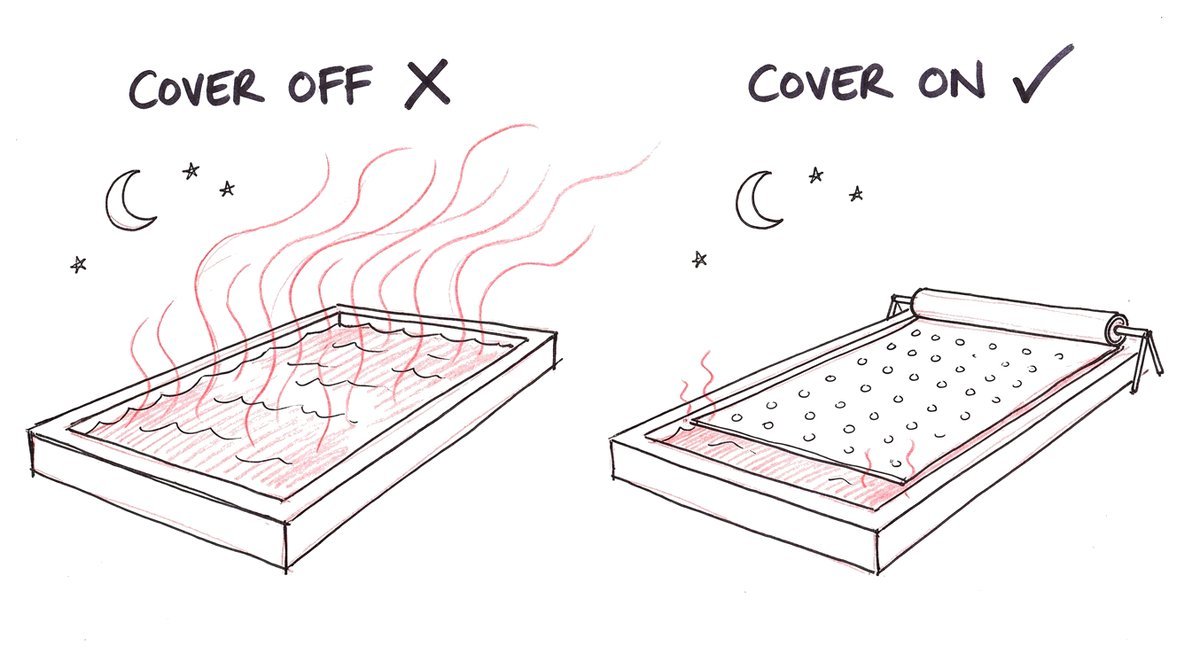
Think of a pool as a very big cup of tea left on the bench with no lid. Most of the heat goes out through the top: warm water evaporates, the breeze carries the warm, damp air away, and on a clear night the surface gives its warmth straight up to the sky. A smaller share soaks out through the walls and floor of the shell into the ground around it, and some is lost from the pipes on the way from the heater to the water.
That’s why heating a pool can feel like filling a bucket with a hole in it. You warm the water during the day, by the next morning a good part of that warmth has gone, and the heater starts again. Phil’s experience is that the heat escapes every day even when owners do all the right things, so everything below is about slowing the leak. Nobody can stop it.
Why the cover matters more than anything else
Because the surface is where most of the heat goes, a cover on the surface does more than anything else you can buy. The federal government’s energy advice says a bubble cover can cut heat losses from a heated pool by as much as 75%, and that a translucent bubble cover, which lets the sun through, can warm a pool by as much as 7 degrees by itself. It also stops a lot of water evaporating, which counts for something in a Perth summer.
The catch is that a cover only works when it’s on. Put it on every evening and whenever nobody’s swimming, and buy a roller with it, so taking it off and putting it back is a one-minute job and not a wrestle. When someone asks us about heating a pool, the first thing we ask back is how often it’s used and whether there’s a blanket, because the answer changes the size of everything else.
How do I stop the pipes wasting heat?
Between the heater and the pool runs a length of pipe carrying warm water, and every metre of it gives heat away to whatever’s around it. Bare pipe across a garden bed or buried in damp ground is warming the garden. So keep the heater, whether it’s a pool heat pump or a heat exchanger fed from the house’s heating system, as close to the pool as the site allows. Then insulate the pipe the whole way, with insulation made for outdoor use and protected from the sun and the weather.
We’re particular about this because hidden pipework is where heat quietly disappears. One of the worst losses Euroheat ever traced was in a new commercial building in 1992, where the hot-water pipes were neatly insulated wherever you could see them and bare inside the walls and floors. A pool’s pipework is a much smaller job, but the rule is the same: the insulation nobody can see is the insulation that gets skipped.
Can I insulate the pool itself?
Only while it’s being built. A concrete or fibreglass shell sits in the ground, and once it’s in, there’s no way to get at the outside of it. If your pool is still on paper, ask the pool builder what can go between the shell and the ground. It’s the same question we ask about a heated floor: insulation underneath is cheap before the concrete goes in and impossible afterwards, as our article on heat escaping from a heated slab explains.
Wind and sun matter too, and they’re easier to change. Wind across the water carries the warm, damp air away and speeds up evaporation, so a fence, a hedge or a glass screen on the side the afternoon sea breeze comes from will help. Shade works the other way, keeping the sun off water that would otherwise warm itself. On our modelling, a typical shaded Perth pool reaches a comfortable 30 degrees on its own on only six to nine days a year, so a pool you want warm needs all the sun the site can give it.
What about swimming through a Perth winter?
This is the honest bit. Even with a good cover and insulated pipes, keeping a pool warm through June and July means pouring heat into water that’s losing it to cold nights all season, and we don’t recommend it or quote it. We design pool heating for the warm half of the year, holding the water at around 28 to 30 degrees from spring to autumn, which is when people actually swim.
If you’d like the option of a warm pool for the odd winter weekend, there’s a better way than running a heater all season. In a Dalkeith house Phil filmed, the pool heating was sized to bring the pool up to temperature in about 24 hours, so the owners switch it on the day before a party and leave it off the rest of the time. Phil’s view is that heating a pool every day only to lose the heat every night is a waste of money and energy.
Other questions people ask us about keeping a pool warm
Does a solar cover actually heat the pool?
It helps. A translucent bubble cover lets sunlight into the water and holds the warmth in overnight, and energy.gov.au says it can warm a pool by as much as 7 degrees. It won’t make a cold pool warm in early spring by itself, but it adds the sun’s warmth every clear day and keeps it.
Is a cover worth it if I don’t heat the pool?
Yes. An unheated pool still collects warmth from the sun, and energy.gov.au says a bubble cover can reduce a pool’s cooling by 3 to 4 degrees. You also lose far less water to evaporation over a summer.
Do the pipes need insulating if the pool runs on a heat pump or solar?
Yes. Whatever makes the heat, the pipe carries it to the pool, and a bare pipe loses it along the way. Short, insulated runs matter more the cheaper your heat is meant to be, because a cheap source wasted is still wasted.
Can my home’s heating system warm the pool?
Often, yes. The heat pump that runs your floor heating in winter sits idle in summer, which is when you want the pool warm. We explain how that works in heating the pool from your home’s heat pump.
Where to go from here
If you’re in Perth or the south-west and a heated pool is in your plans, the 5-minute quote gives you your options in writing within 3 working days, each with its price and a modelled running cost, and you don’t need plans to start. If you’re still weighing it up, read what it costs to heat a pool in Perth, or see how we heat pools on solar you’d otherwise export on our pool heating page.