
Gas or electric central heating: should I replace my gas heater with a heat pump?
The short answer
Central heating can run on either. Gas ducted heating burns gas, ducted reverse-cycle air conditioning runs on electricity, and hydronic radiators or floor heating take their warm water from a gas boiler or an electric heat pump. If your gas heater is old and dear to run, a heat pump of some kind usually costs less to run in Perth, because it gets three to four units of heat from each unit of electricity. Reverse-cycle air conditioning is the cheapest swap; radiators on a heat pump cost more and give quiet, even warmth. WA hasn’t banned gas, so there’s no rush.
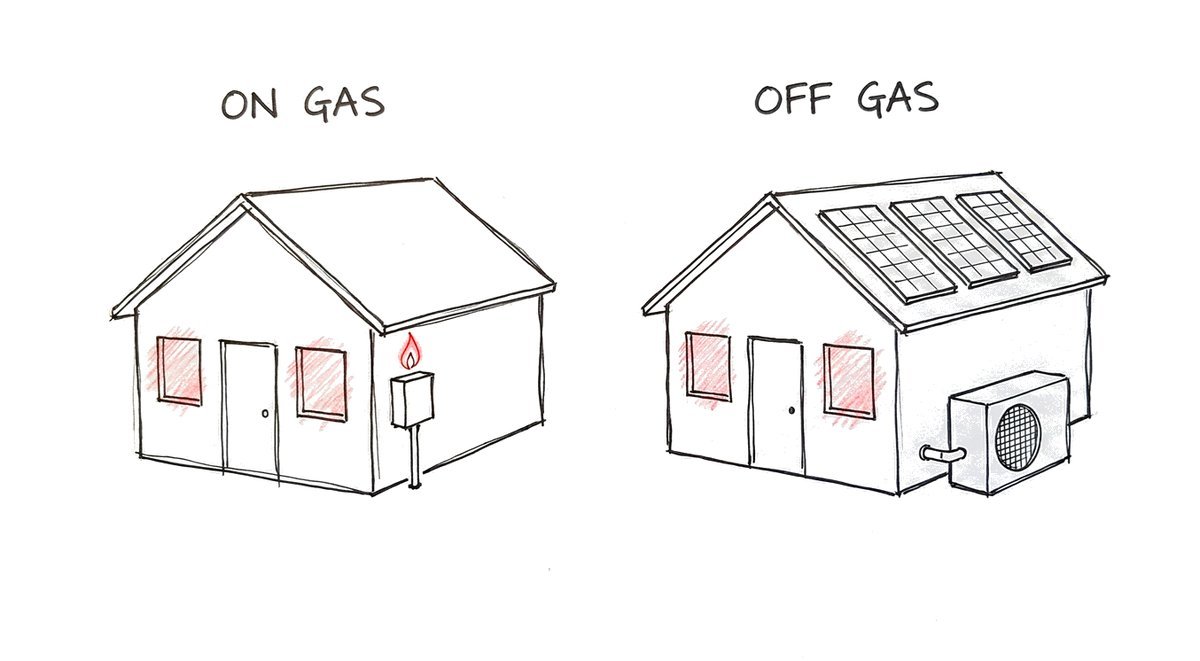
The question usually arrives with a bill. The gas ducted heater that came with the house is getting old, it takes forever to warm the place on a July morning, and the last winter gas bill hurt. Or it has finally stopped, someone has quoted a like-for-like replacement, and you’re wondering whether that’s still the right thing to buy. It may be. It’s worth knowing what else is on the table first.
Is central heating gas or electric?
It can be either, and the words get used loosely. In Australia, central heating usually means one system that heats the whole house from one place, and there are three common kinds.
Gas ducted heating burns gas in a unit in the roof or outside and blows warm air through ducts to a vent in each room. Ducted reverse-cycle air conditioning does the same job with an electric heat pump, and cools in summer as well. Hydronic central heating sends warm water instead of warm air, to radiators on the walls or pipes in the floor, and the water is heated by either a gas boiler or an electric heat pump.
So whether your central heating is gas or electric depends on what makes the heat. What has changed is that the electric options now run on heat pumps, and a heat pump makes far more heat from each unit of energy than anything that burns gas.
My gas heater is old and dear to run. What are my options?
The simplest is a new gas ducted heater. It reuses your ducts and vents, it keeps you on gas and its daily supply charge, and it heats the way the old one did, with warm air from the ceiling that drifts straight back up to it.
Ducted reverse-cycle air conditioning gives you cooling too and usually lower running costs. The catch is the ducts. Ducts sized for a gas heater are usually too small for reverse cycle, which moves more air at a gentler temperature, so most conversions need new ducting through the roof. Split systems in the rooms you use most are cheaper again. Reverse-cycle air conditioning is a good, cheap way to make heat, and for plenty of houses it’s the right answer. Where people tire of it is the comfort: the blown air, the warm layer under the ceiling, and the rooms without a unit.
Radiators on a heat pump are what we put into most existing homes. A heat pump outside warms water, and the water runs to a slim panel in each room, where it warms you the way winter sun does. There are no ducts at all, so the old gas ducts can stay in the roof or come out, and a radiator installation takes about a day per radiator, with you living in the house. It costs more than air conditioning. What you get for it is quiet, even warmth that reaches the floor, which matters most in older homes with high ceilings, where warm air heads straight for the roof.
 6 min
Will a heat pump cost less to run than my gas heater?
Usually, yes. Gas costs less per unit than electricity, but anything that burns gas can’t give you more heat than the gas holds. A good modern gas boiler turns each unit of gas into about 0.95 units of heat, and older gas heaters manage less. A heat pump moves heat out of the outside air and gives three to four units of heat for each unit of electricity, nearer three on a cold morning when it’s feeding radiators. At Synergy’s home rate of 33.26 cents a kilowatt-hour, that multiplication generally wins.
Two things push it further in Perth. If you have solar panels, a heat pump can use what your roof makes in the middle of the day instead of selling it back for about 2 cents a unit, and a gas heater can’t. And if heating is the last thing in the house on gas, coming off gas lets you close the account and stop paying its daily supply charge. If the hot water and the cooktop are still on gas, that charge stays until they go too (we cover the hot water side in should I replace my gas hot water with a heat pump).
Can I keep gas and still have radiators?
Yes. Radiators run happily on a gas boiler, and if your house already has a boiler in good order, they can run from that. As a ballpark, a radiator installation in WA starts at around $3,500 per panel fully installed on a gas boiler, or around $7,500 per panel on a heat pump. That’s a general figure, not a quote: the real number moves with your rooms, your layout and the heat source you choose.
The gas boiler costs less to put in, and the heat pump usually costs less to run, so the right one depends on your budget now and how long you’ll stay. We install both. A heat pump is what we suggest first, and if you’d rather keep gas we’ll design the radiators around a gas boiler. Either way each room is sized properly, which is the part that decides whether the back bedroom is warm in July (more in adding radiator central heating to an older Perth home).
Is WA phasing out gas?
Not for homes in general. WA hasn’t banned gas connections, and the state government has said it isn’t considering a ban. The exception is Albany, where the network owner is leaving: the gas network is being decommissioned from early 2027, after a delay the government announced in May 2026. Albany households will need another way to heat, and the options above are the same ones.
For the rest of WA there’s no deadline. You can replace your gas heater when it suits you, choosing on comfort and running cost, with no need to hurry.
Other questions people ask us
Can I reuse my gas ducts for reverse-cycle air conditioning?
Occasionally, but usually not. Ducts sized for a gas heater tend to be too small for the larger volume of air a reverse-cycle system moves. Have them checked before you count on reusing them, because new ducting changes the price.
Do radiators cool the house in summer?
No, radiators are for heating. Phil is the first to say air conditioning is hard to beat for cooling, so many households keep or add split systems for summer and let the radiators do the winter.
Should I fix the insulation before I replace the heater?
Often, yes. Phil’s first advice for an older home is to check the ceiling insulation, where batts are often pushed aside and leave gaps, and the high wall vents that older houses use to let summer heat out. A house that loses less heat needs a smaller heater, which costs less to buy and to run.
Do radiators work in a double-brick house?
Yes, and they suit it. Brick walls hold warmth, so once the radiators have warmed them the house stays even and cools slowly. A double-brick house is slow to warm from cold at the start of the season, which is why it does best with heating that runs steadily through the cold months instead of in short bursts.
Where to go from here
If you’re in Perth or the south-west, the 5-minute quote gives you your options in writing within 3 working days, each with its price and a modelled running cost, and you don’t need plans to start. Mention your gas heater in the notes, and if you’d like a gas boiler option alongside the heat pump, say so. If you’d rather read first, heating an existing home has the short version, and our free radiator guide explains how a radiator system is sized room by room.