
Can I add radiator central heating to an older Perth home?
The short answer
Yes, and radiators are usually the best way to do it. Warm water from a heat pump outside, or a gas boiler, runs through insulated pipes to a slim panel in each room, and the pipes go under the floorboards, through the roof space or down a cavity wall, so nothing gets dug up. Installing takes about a day per radiator, and you don’t move out. Before any heating goes in, though, look at the vents and the ceiling insulation, because in an older house that’s often the cheapest warmth you’ll ever buy.
Older Perth houses are lovely for most of the year. Then July comes, and the Federation cottage, the 1930s bungalow or the 1960s double-brick house becomes a place where you heat the room you’re in and shut the door on the rest. Most of these homes never had central heating at all, and the real question is whether it can go in now without pulling the place apart. It can.
Why radiators suit an older house
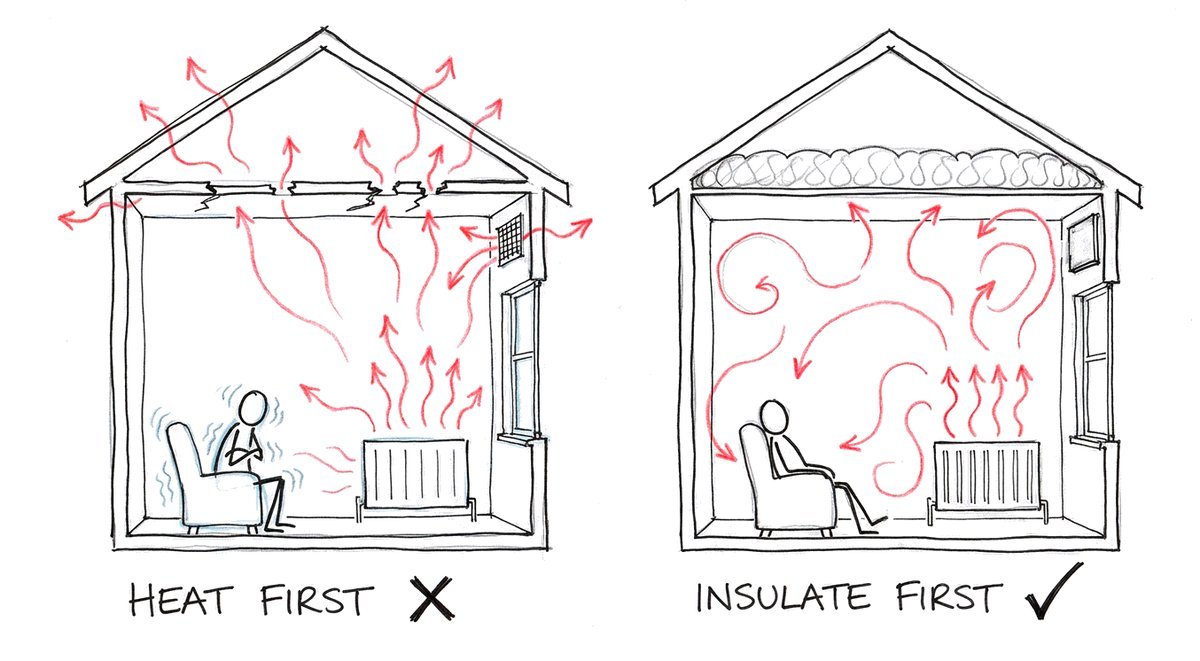
Older Perth homes were built for summer. High ceilings let the hot air collect above your head, and vents high in the walls and a ventilated space under the floorboards let it escape. In July those features keep doing their job, which is a problem for any heating that works by warming the air. Warm air from a split system or a ducted vent rises straight to that high ceiling, and a good share of it leaks out, so you sit on the couch in a cool layer under a warm ceiling.
Radiators sit low and give much of their heat as radiant warmth, which warms you, the walls and the furniture directly, the same way stepping out of the shade into winter sun does. Most of Europe has heated its older homes this way for a hundred years. The other hydronic option, floor heating, means lifting the floors in a house you live in, and we explain why that’s rarely worth it in putting underfloor heating into an existing home.
 6 min
6 min
Where do the pipes go?
This is the question everyone asks, and in most older Perth houses there’s an easy answer. The pipes carry warm water from the heat source to each radiator, wrapped in insulation so the heat isn’t lost on the way, and there are several ways to hide them.
If the house has raised timber floors, they usually run underneath, where installers can crawl through and come up through the floor beside each radiator. If not, they can run through the roof space and drop down inside a linen cupboard or a wardrobe, popping out neatly at the radiator. Perth’s double-brick walls help too, because the cavity between the two skins of brick is a ready-made path down the wall.
When none of that works, the pipes can run along an outside wall under a neat capping, or underground in a watertight sleeve. Some owners choose exposed copper inside the room, which Phil finds really neat, though not everybody likes the look. There’s almost always a route, and the harder routes cost a bit more.
Fix the leaks before you heat
In an older home, the cheapest heat is the heat you stop losing. Many character houses have vents high in the walls, built to let summer heat out, and they let winter heat out all night as well. Ceiling insulation in older houses is often patchy, pushed aside over the years by every tradesperson who has been up in the roof. Phil’s advice is the same in nearly all of them: “insulate the ceiling first, stop the draughts where you can, and then put the heating system in.”
The order matters for your money as well as your comfort. Every bit of heat the house stops losing is heat the radiators don’t have to replace, so a sealed house needs smaller panels and a smaller heat pump. Don’t seal everything, though: the vents under a raised timber floor are there to keep it dry, so those stay open.
Will it work with my power, gas and plumbing?
Usually, after a check. A heat pump needs its own circuit from the switchboard, and in some older houses the switchboard or meter box needs an upgrade to take it. A gas boiler needs a gas supply with enough pressure and a big enough pipe. The heating water itself runs in a sealed loop, separate from your taps, so it only needs a connection to the water supply to fill it. You don’t need any ducts, and your evaporative cooler or split systems can stay for summer.
We check all of this on a site visit, and the electrical, gas and water connections are done by licensed tradespeople as part of the job. Our article on the rules for installing radiators in WA explains who signs off what.
What the installation is like
Less disruptive than most people brace for. A radiator installation in an existing home takes about a day per radiator, so a house with five radiators is about five working days, and on a bigger house more installers can work at once. The installers hang the radiators, set up the heat source and run the pipes between them, and if they need to move a couch or a chest of drawers to reach a wall, they put it back. They clean up at the end of each day, and nobody has to move out.
If you’re renovating anyway, it’s a chance to do more. In the 1895 Federation house in Fremantle where Phil filmed his radiator videos, the floor was coming up during the renovation, so the pipes run underneath it in insulation, under jarrah boards as old as the house. Radiators heat the old rooms, floor heating warms the new extension and bathroom, and a towel rail dries the towels, all from one heat pump.
Other questions people ask us
Do I need the house plans?
No. For an existing home we measure the rooms on a site visit: the glass, which way each room faces, the ceiling heights and the insulation. You don’t need plans to start a quote either.
Will radiators look right in a heritage house?
They can. Cast-iron column radiators suit many Federation and heritage homes, and after standard steel panels they’re what we fit most often in houses like that. They cost more, so our guide to choosing a type of radiator sets out the trade-offs.
What does it cost?
As a ballpark, a radiator system in Western Australia starts from around $3,500 per panel fully installed on a gas boiler, or around $7,500 per panel on a heat pump. That’s a general figure, not a quote, and our article on what radiators cost to install explains what moves it.
Can radiators cool the house in summer?
No. Radiators are for heating, so keep your evaporative cooler or split systems for summer, or ask us about cooling when you request your quote.
Where to go from here
If you’re in Perth or the south-west, the 5-minute quote shows your options in writing within 3 working days, each with its price and a modelled running cost, and you don’t need plans to start. Tell us the age of the house and how it’s heated now. If you’d like to check first whether your home suits radiators, the 2-minute quiz will tell you, and the free radiator guide goes deeper into heating an older home.