
Can I paint my radiators?
The short answer
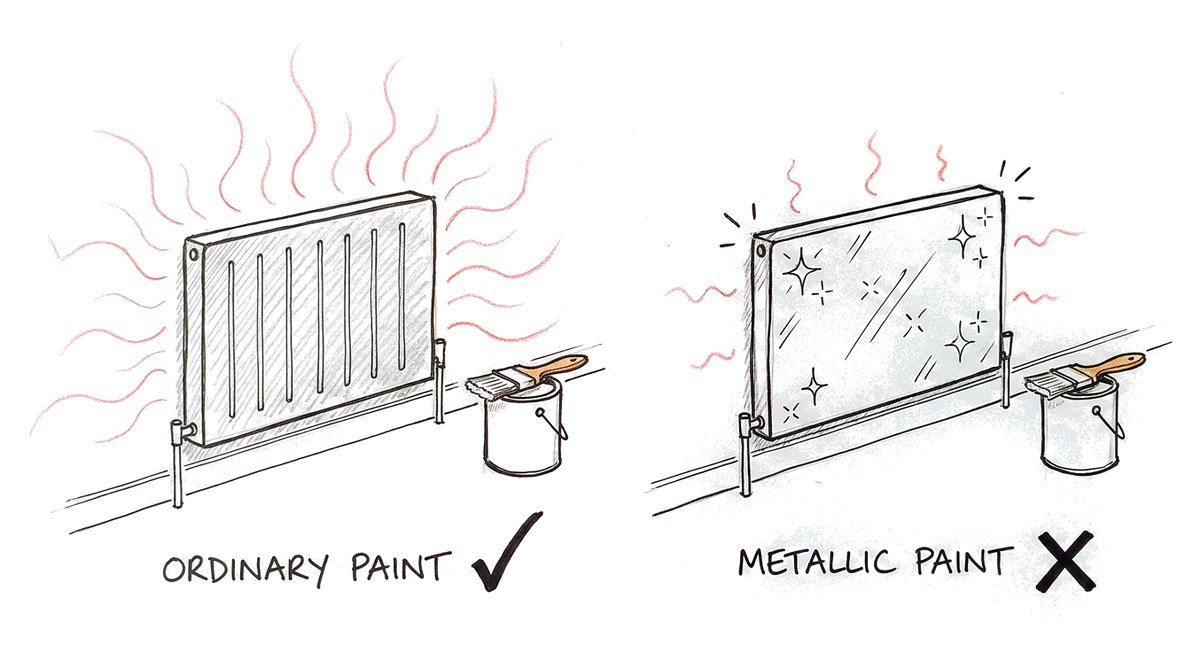
Yes. Any ordinary, non-metallic paint, dark or light, leaves a radiator’s heat output almost unchanged, so choose the colour that suits the room. The one finish to avoid is metallic paint (silver, aluminium, bronze or gold), which in tests cut a radiator’s heat by about a fifth. Paint it when it’s cold, with a paint made for metal that gets warm, and keep the valves and the little bleed screw clear.
This usually comes up over a white panel that doesn’t suit a freshly painted room, or an old cast-iron radiator wearing several chipped coats of something. The answer is mostly good news, with one trap that catches people out.
Does the colour change how much heat it gives?
Hardly at all. A radiator gives off its heat two ways: by warming the air that drifts up over it, and by radiating warmth straight to you and the room, the way a footpath that’s been in the sun all day does. The radiant part is the bigger one, about half to 60% of the output in Phil’s numbers. Paint makes no difference to the air. On the radiant part, the colour you can see matters far less than you’d expect, because the warmth a radiator gives off is invisible infrared, and nearly every ordinary paint, white or black, gives it off about equally well.
This was settled a long time ago. A US Bureau of Standards circular from the 1930s, reporting tests on radiators, noted that the paint “need not be black”: white and coloured paints all let the radiator give off its heat well. So paint it the colour you want.
Why metallic paint is the one to avoid
Shiny metal is a poor radiator of heat. It’s the reason a foil blanket keeps a runner warm, and the reason a radiator coated in silver or bronze paint, whose top layer is tiny flakes of metal, gives off less warmth. In the tests the Bureau reported, a cast-iron column radiator painted with aluminium paint gave out only about 80% of the heat it gave with an ordinary paint or enamel on it. Those tests were on old cast iron, but the physics is the same for a modern steel panel.
If yours is already silver, the fix is easy. A coat of ordinary paint over the metallic one brings the radiant warmth back, and the metal paint underneath does no harm.
How to paint a radiator
What follows is general painting practice, the same as the advice on most tins, rather than anything special to heating. Turn the heating off and let the radiator go fully cold. Clean off the dust and grease, sand lightly so the new paint has something to grip, and use a paint made for metal that gets warm, often sold as radiator enamel. Thin coats dry better than thick ones, and the paint needs to dry fully, as long as the tin says, before the heating goes back on.
Leave the working parts alone: the valves, any thermostatic head on top of a valve, and the small bleed screw in the top corner that lets air out. Paint can stick them, and you’ll want them to turn when they’re needed.
Old cast-iron radiators need one more thought before any sanding. Paint containing lead was used in many Australian homes before 1970, and the dust from sanding it is a real health risk. The federal government’s Lead Alert guide to painting your home explains how to test for lead and deal with it safely.
Other questions people ask us
Can I hide a radiator behind a cover or a couch?
You can, but it costs you warmth. A radiator’s radiant heat only reaches what it can “see”, so a box over it or a couch in front blocks that part. A couch 20 or 30 centimetres away still lets it work, though Phil reckons 10 to 20% less effectively. His advice: “it’s best to not hide the radiators away.”
If I’m getting new radiators, should I plan to paint them?
Modern steel panels come with a tough factory finish baked on, usually white. If white won’t suit the room, ask about the finish before the panels are ordered, which is easier than painting them later. Our guide to choosing a type of radiator covers the shapes and styles.
Will painting affect the warranty?
If the radiator is still under its maker’s warranty, check with the maker or your installer before you paint it.
Where to go from here
If your radiators belong to an old system that never quite warms the house, paint won’t fix that, and the size of the panels usually will. If you’re in Perth or the south-west, the 5-minute quote shows your options in writing within 3 working days, each with its price and a modelled running cost, and you don’t need plans to start. If you’re still reading up, heating an existing home explains how radiators are sized and fitted in a house that’s already built.