
Can I have hydronic heating in an apartment or small home?
The short answer
Sometimes. Hydronic heating needs the same basic kit whatever the size of the home: a heat pump outside with room to breathe (or a gas boiler on a wall), insulated pipes to each room, and the pumps, tank and controls that run it. In a small house, villa or townhouse with somewhere to put that kit, radiators work well and the kit can be made compact. In a small apartment where you only need one or two rooms warm, a reverse-cycle split system is usually the better buy, and we’d rather tell you that than sell you a system you don’t need.
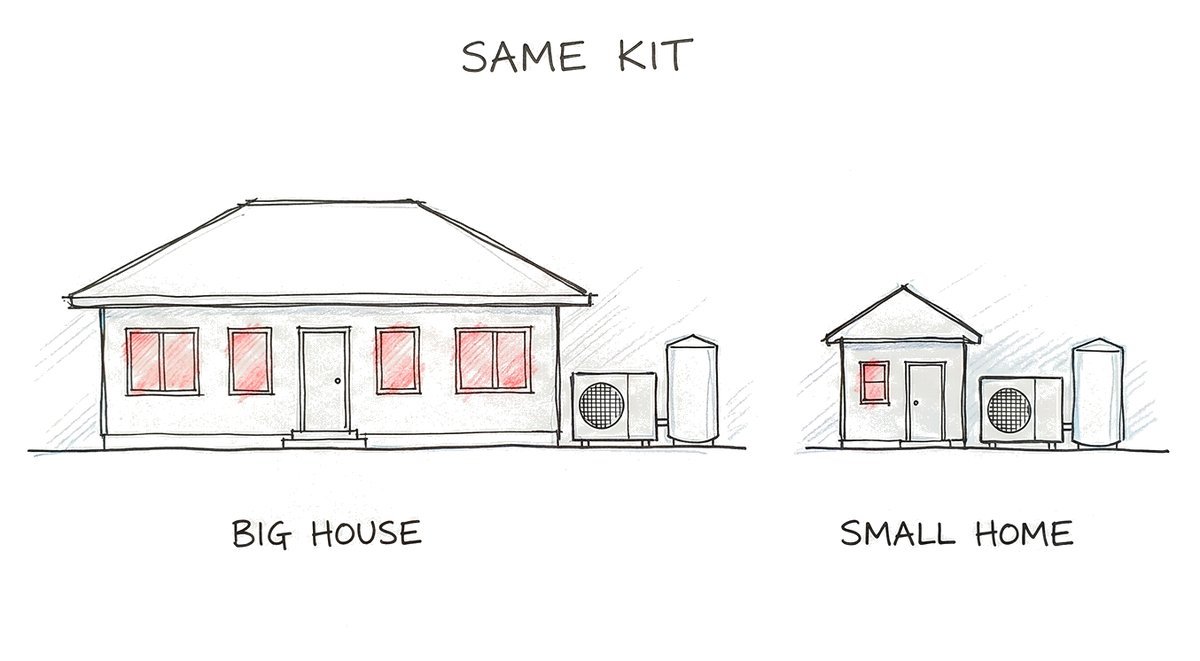
This question usually comes from someone who has lived with radiators in Europe, or stayed somewhere that had them, and now lives in an apartment or a smaller home that’s cold in winter. They remember the quiet, even warmth of radiator central heating and want it back. It’s a fair thing to want, and in the right small home you can have it. The honest answer turns on two things: where the equipment would go, and how much heat the home actually needs.
What hydronic heating needs, whatever the size of the home
A hydronic system warms water and sends it round the house to radiators or a heated floor. The heat usually comes from an air-to-water heat pump, a unit about the size of a large air conditioner’s outdoor unit, and it needs open air around it. Box it into a tight corner and it breathes its own cold exhaust back in, which can cost it up to 50% of its efficiency. A small courtyard or a narrow balcony is often exactly that kind of corner.
Then there’s the gear indoors. Done with separate parts (a heating tank, a hot water tank, pumps, expansion vessels and a control panel), the plant needs a floor area of at least a metre by three, Phil reckons, and in practice closer to 1.2 by 3.5 metres. A gas boiler takes much less room. It’s a box hung on a wall, either inside with a flue or outside under a weatherproof cover, which is one reason it suits tight spaces. We install both, though on running cost a heat pump usually comes out ahead in Perth.
None of that shrinks much when the home does. A two-bedroom townhouse needs a smaller heat pump than a five-bedroom house, but it still needs a heat pump, a place for it, pipework to every room and the same design and commissioning. Spread over fewer rooms, the cost of each warm room goes up.
The all-in-one unit for tight spaces
Where floor space is the problem, there’s a neater way to do it. An all-in-one indoor unit holds the tap hot water tank, the buffer tank for the heating and all the controls in one cabinet about the size of a medium fridge. It lives in a garage or a cupboard, and the heat pump outside connects to it with two pipes and a couple of cables.
Phil likes them, and he’s straight about the downside: “Now, it sounds really good, doesn’t it? But as always, there is a catch. And the catch is it costs extra.” It costs more than buying the separate parts and fitting them together, so many people price both and choose the bigger footprint to pay less. For a small home with no room for a plant area, the extra can be worth it.
 5 min
Where it makes sense in a small home
Hydronic heating earns its place in a small home when the whole home is cold, room after room, through winter, and you want every room warm without blown air. It helps if there’s a sensible spot outside for the heat pump, a garage, laundry or cupboard for the indoor gear, and a way to run pipes to each room, under a timber floor, through the roof space or down a wall cavity. A well-insulated small home may need only a couple of radiators to be comfortable all winter.
It also makes most sense if you’re staying. A radiator system costs more to put in than a split system, and the reward comes over years of quiet, even warmth. Designed properly on a heat pump, radiators run in the same league as a good reverse-cycle system, so what you’re paying for is the comfort.
When it isn’t worth it
In a small apartment, the sums rarely work. If you need one living area and a bedroom warm, a reverse-cycle split system heats them for a fraction of the cost to install, cools them in summer, and runs efficiently because it’s a heat pump too. In an apartment building there’s also the question of where an outdoor unit and pipes can go at all, which usually needs the strata’s approval.
If the cold is one room for a few weeks a year, even a plug-in heater may be the cheaper answer. Just know what it costs to run. A plug-in panel turns one unit of electricity into about one unit of heat, while a heat pump turns it into several, so a plug-in heater is fine for an hour on a cold evening and expensive as the main heating.
Other questions people ask us
Can my hot water system run the radiators too?
Not a normal one. A heating system needs to circulate its water and have expansion vessels and special valves, and adding those to a standard hot water unit wipes out the saving. It would also void the hot water unit’s warranty. One heat pump can do both jobs in the right setup, which we cover in one heat pump for heating and hot water.
Can I have floor heating in an apartment?
In an existing apartment it means lifting the floors and laying a new screed, so it only makes sense in a full renovation. If all you want is a warm bathroom floor, an electric mat under new tiles is the simple answer. Phil’s own view is that for one small bathroom on its own, electric is definitely the way to go.
What about electric panel heaters on the wall?
They’re cheap to buy and easy to fit, and they’re fine for occasional heat. They turn electricity into heat one for one, so as the main heating for a whole home they cost far more to run than a heat pump. We compare them with radiators in radiators, panel heaters and convectors.
Is a split system really the better buy for a flat?
For a small flat that needs one or two rooms warm, usually yes. We go through the trade-offs in radiators or split systems.
Where to go from here
If you’re in a small house, villa or townhouse in Perth or the south-west, the 5-minute quote gives you your options in writing within 3 working days, each with its price and a modelled running cost, and you don’t need plans to start. To see how radiators work in a home that’s already built, heating an existing home has the short version, and our heat pump page explains where the heat pump goes and why it needs room.