
Is heat recovery ventilation noisy?
The short answer
A well-designed central system is close to silent in the rooms. The fans sit in a laundry or cupboard, and in a quiet bedroom at night you might just hear air moving at the vent. Room-by-room wall units are noisier, because the fan is in the room, which is why Phil doesn’t put them in bedrooms. As a benchmark, the Passive House Institute, which certifies ventilation units for very airtight homes, sets a target of under 25 dB(A) in living spaces and under 30 dB(A) in rooms like kitchens and bathrooms. Most of the noise is decided by the design and by keeping the filters clean.
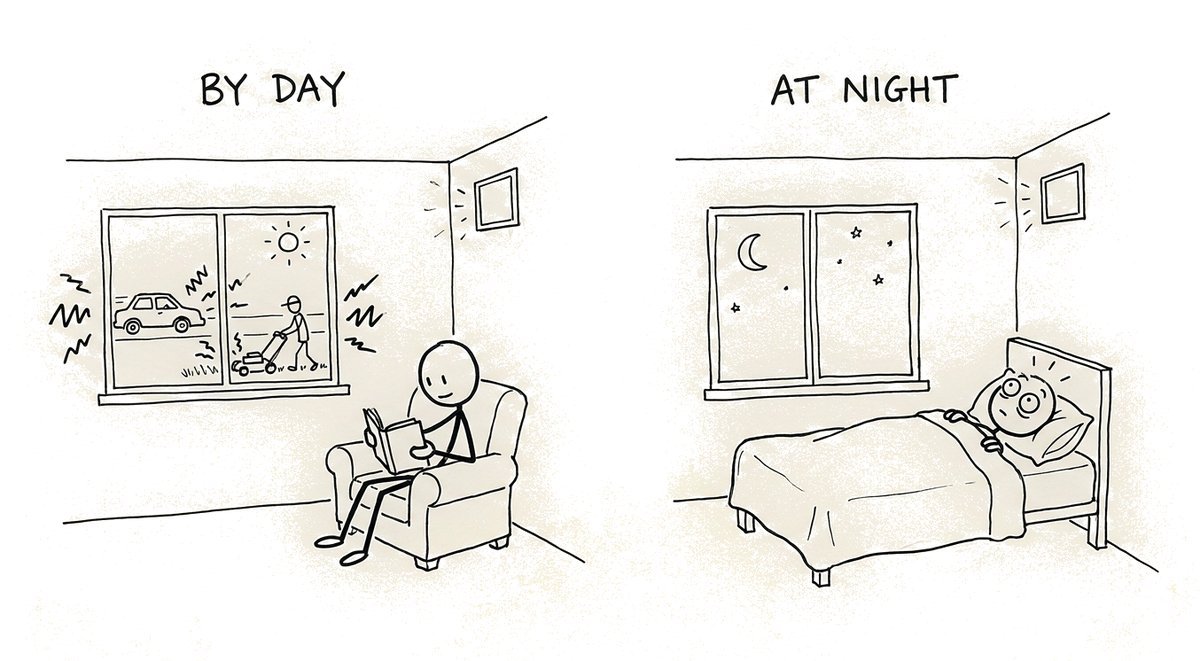
Of everything you could check before choosing a heat recovery system, Phil puts noise first: “The most important thing to look for when you have a HRV system is the noise level.” The reason is simple. Unlike a heater or an air conditioner, which you switch on when you need it, ventilation runs 24 hours a day, so the sound that matters is the one in your bedroom at two in the morning.
Where does the noise come from?
Mostly from two places. The first is the fans, which push fresh air in and pull stale air out through the filters and the heat exchanger. The second is the air itself, moving through the ducts and out of the vents, which you hear as a soft rushing sound when the room is otherwise silent.
Both get worse with a poor design or a tired filter. A fan that has to work near its limit, because the unit is too small for the house or the ducts are too narrow for the airflow, is louder than one turning over gently. And as a filter clogs, the fan has to push harder to get the same air through it, so a system that was quiet when new can get noisier for no reason anyone notices.
How quiet is a central system?
Quiet in the rooms, if it’s designed for it. The unit itself, about the size of a bar fridge, lives on a wall in the laundry, a linen cupboard or the garage, away from where you sleep. Units that are too loud for a living area have to be installed out of earshot, and the noise that travels along the ducts is dealt with by silencers fitted in them, which is how certified systems meet the Passive House targets in the rooms.
What’s left is the air at the vent. Phil’s experience is that in the middle of a dead-quiet night you can sometimes hear a faint sound of air coming through the vent, that almost everybody finds it perfectly fine, and that the few who can’t stand it need it designed for from the start. That’s one more reason to get a design with every vent shown on the plan before anything’s installed.
Why do room-by-room units stay out of bedrooms?
Because the fan is in the room with you. Room-by-room units are small, and each has a fan pushing air through a filter right there in the wall, so they all make some noise whatever the brand. During the day you won’t notice it under the cars outside, the neighbour’s mower and your own appliances. In the still of the night it’s another matter, and Phil’s view is that most people would struggle to sleep with one in the bedroom.
So they go where people aren’t sleeping: kitchens, bathrooms, living rooms and studies. If you want fresh air in the bedrooms as well, that’s an argument for a central or compact central system, which we compare in central or room-by-room heat recovery.
How do I compare the noise figures on different units?
Carefully, because a decibel figure on a brochure means little until you know what was measured. Phil’s view is that sound data on its own doesn’t tell you much, and there are two different numbers in play. One is the sound power of the unit, how much noise the machine itself puts out. The other is the sound level in the room, what you actually hear in the bedroom once the unit is behind a wall and the ducts have silencers.
The Passive House Institute sets a limit for both: 35 dB(A) for the unit’s sound power, so the room it’s installed in stays bearable, and the 25 and 30 dB(A) targets in the rooms you use.
The other catch is fan speed. A unit is quieter at a low airflow than at a high one, and the figure that matters is the one at the airflow your house actually needs. Certified units list their noise at a stated airflow for exactly that reason, so when you compare units, compare them at your design airflow, not at their quietest setting. If you don’t know your design airflow yet, start with what size unit your home needs.
Other questions people ask us
Will it make the house quieter or louder?
Often quieter overall. In a well-sealed house with heat recovery you don’t need to open windows for fresh air, so the traffic and the neighbours stay outside, and people notice that as much as anything.
Will the neighbours hear it?
Rarely, with a central system. The fans are inside the house, and outside there’s only a pair of grilles. That’s a big difference from an air conditioner or a heat pump, whose fan sits outside, which we cover in how loud a heat pump is.
Can I turn it down at night?
Yes. The controller changes the fan speed, and a lower speed is quieter. Turn it down too far for too long, though, and you lose the fresh air you bought it for, so the better answer is a design that’s quiet at the airflow you need.
Does it get louder as it gets older?
It can, if the filters are left to clog. Change them when the unit tells you to, or about every six months for room-by-room units, and the fan never has to strain.
Where to go from here
If you’re building or renovating in Perth or the south-west, the 5-minute quote gives you your options in writing within 3 working days, each with its price and a modelled running cost, and you don’t need plans to start. If you’re still comparing systems, our heat recovery page sets out when ventilation is worth it and where it usually goes wrong.