
Is floor heating with a heat pump environmentally friendly?
The short answer
It can be, with a heat pump and a house and floor built right. A heat pump turns each unit of electricity into about three units of heat, so even on WA’s main grid, still about 60% gas and coal, it puts out about the same carbon as a good gas boiler or somewhat less, and the gap grows as wind and solar grow. The rest depends on the house and the floor: one built cheaply uses about two and a half times the electricity of one built right ($601 against $240 a winter month for 200 m², modelled estimates), and the carbon follows the bill.
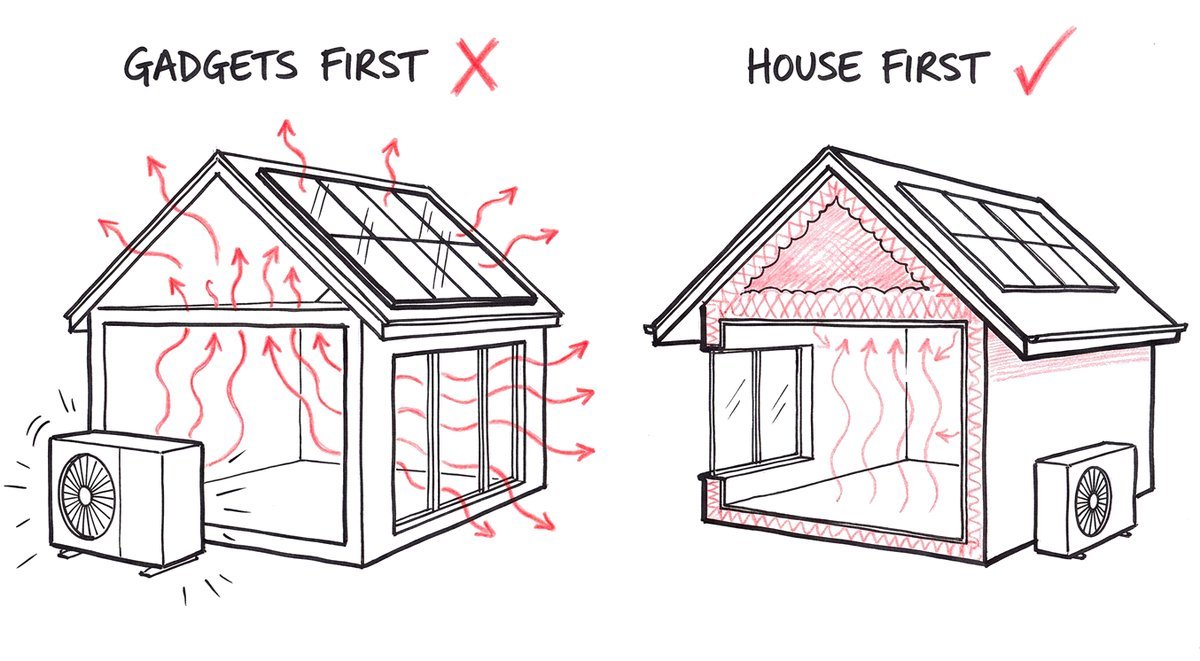
Most people who ask us this have already been told that floor heating is the green choice, usually by someone selling it. Some of that is true. What gets left out is that a heating system is only as green as the electricity it runs on and the house it keeps warm, and in Perth both are worth a closer look.
Where does WA’s electricity actually come from?
A heat pump runs on electricity, so its carbon depends on what the grid burns. On the South West Interconnected System, the grid that supplies Perth and the south-west, the Australian Energy Market Operator’s figures show that gas made 31.7% of the electricity in the year to June 2025 and coal made 27.7%. Rooftop solar made 19.5% and wind 16.8%. A decade ago, coal and gas supplied about 90% of it; now wind and solar supply around a third, and the share keeps climbing.
For heating, timing matters too. Rooftop solar is the grid’s biggest generator at midday and makes nothing after dark, while a Perth house wants most of its heat on cold mornings and in the evening. The power a heat pump draws at seven on a July night comes from a grid with no solar running, so a bigger share of it is gas and coal than the yearly figures suggest.
Is a heat pump greener than a gas boiler?
A gas boiler burns gas in your house and turns each unit of it into a little under one unit of heat; the best condensing boilers reach about one for one. A heat pump moves heat instead of making it. It pulls warmth out of the outside air, even on a cold morning, and pumps it into the water that runs through your floor. Feeding a well-designed floor, it gets about three units of heat out of each unit of electricity, and sometimes four on a mild day.
Run those numbers through the federal government’s 2025 emission factors for WA’s grid and for natural gas, and a heat pump on a well-built floor today puts out about the same carbon as a good gas boiler for the same warmth, or somewhat less. That’s closer than most brochures admit. The difference is where each is heading: the grid gets cleaner every year, and a gas boiler burns the same gas in its twentieth winter as in its first.
That’s one reason we suggest a heat pump first. The other is that on running cost it usually comes out ahead in Perth. If you’d rather have gas, we design and install gas boilers too, with the same care over the floor they heat.
Why the house matters more than the heater
Phil has a name for a mistake he sees in a lot of homes built to be sustainable: the efficiency fallacy. Someone falls in love with one product, a new wall system or a clever roof, spends tens of thousands of dollars on it, and finds after the first year that the house is neither as efficient nor as comfortable as they’d hoped.
His advice is to get the fundamentals right first: shade that keeps the summer sun off the glass and lets the winter sun in, decent windows, good ventilation, and good insulation, especially in the roof, where most houses lose and gain the most heat. Then have the design modelled on a computer through a whole year, so the insulation and shading are sized from data instead of guesswork. The greenest heat is the heat a house never needs.
A floor built cheaply burns more power for the same warmth
The same logic runs inside the heating system. Phil describes it as a chain that’s only as strong as its weakest link, and the links multiply. A heat pump working at 300% that feeds a floor delivering 80% of its heat into the room makes a 240% system. Put the same heat pump on a floor that delivers only half its heat and you own a 150% system, using 60% more electricity for the same warmth.
The lost heat mostly goes down and sideways: a heated slab with no insulation between it and the ground can lose up to 70% of its heat into the earth. In bill terms, our modelled running cost for a 200 m² Perth home is about $240 a winter month built right and about $601 built cheaply, at Synergy’s July 2026 home rate. Every extra dollar is extra electricity, and on today’s grid, extra carbon. If the environment is your reason for choosing floor heating, the insulation under the pipes does more good than the badge on the heat pump.
Can solar panels make floor heating carbon neutral?
Solar helps, and Perth is a good place for it: about 40% of households on the main grid already have panels. A heat pump is one of the best things to run on them, because each unit of solar power becomes about three units of heat. The trouble is timing again. As Phil says, in winter the heat is needed in the mornings and the evenings, when the sun isn’t shining.
A heated floor can soak up some warmth at midday and give it back into the evening, but it carries the house for a few hours, not through the night. So a well-run system on solar uses less grid power, never none, and we’d be wary of anyone who promises heating with no emissions or no bill. We go through what a battery adds in whether solar and a battery can run your heating through a winter night.
Is geothermal better for the environment?
Geothermal is the same heat pump idea with a better source. The ground a few metres down sits at around 15 to 20 degrees all year, so the heat pump works less hard than it does pulling heat out of 5 degree air. On our Perth projects, ground and groundwater systems have run up to about 40% cheaper than air-source, which means up to about 40% less electricity and less carbon with it.
It isn’t free to run, whatever anyone tells you, and drilling bores has its own cost and its own footprint. Perth’s mild winters also suit a good air-source heat pump, so the gap geothermal closes is smaller here than in a cold country. Our article on what geothermal costs and when it pays off covers the cases where it earns its keep.
Other questions people ask us
Is floor heating greener than reverse-cycle air conditioning?
A reverse-cycle air conditioner is a heat pump too, and a good one is efficient, so per unit of heat the two are in the same league. Floor heating’s advantages are comfort at a lower thermostat setting and a floor that can store warmth from midday solar. You’ll read that floor heating is 30% more efficient than other heating; Phil’s view is that it’s more like 15% in Australian houses, and only when it’s built right.
Is electric floor heating environmentally friendly?
Electric floor heating turns each unit of electricity into about one unit of heat, so it uses roughly three times the power of a heat pump floor for the same warmth, and three times the carbon on the same grid. For one small bathroom that hardly matters. Across a whole house it does, as our comparison of electric and hydronic floor heating shows.
What about the refrigerant inside a heat pump?
Heat pumps carry a refrigerant gas in a sealed circuit, and many refrigerants are strong greenhouse gases if they escape. That’s one more reason the unit should be installed, serviced and eventually removed by licensed refrigeration technicians, and why a well-made heat pump that lasts beats a cheap one replaced every few years.
Where to go from here
If you’re building or renovating in Perth or the south-west, the 5-minute quote gives you your options in writing within 3 working days, each with its price and a modelled running cost, so you can see what each one uses before you choose. You don’t need plans to start. If you’re not there yet, our heat pump page covers sizing and siting, and the Running Cost Calculator shows the built-right and built-cheap numbers for your floor area.