
What’s the best way to heat and cool a Perth home? Your central heating and cooling options compared
The short answer
There’s no single best system, only the best fit for your house. Reverse-cycle air conditioning is a good, cheap way to heat and cool a small home or a few rooms. For a new build with tiled or concrete floors, hydronic floor heating on a heat pump gives the most even, quiet warmth; built right, it runs at about $240 a winter month in a 200 m² home (a modelled estimate), with air conditioning for summer. For an older home, radiators on a heat pump give the same kind of warmth without lifting the floors. Whatever you choose, size it from a heat-load calculation for your own house.
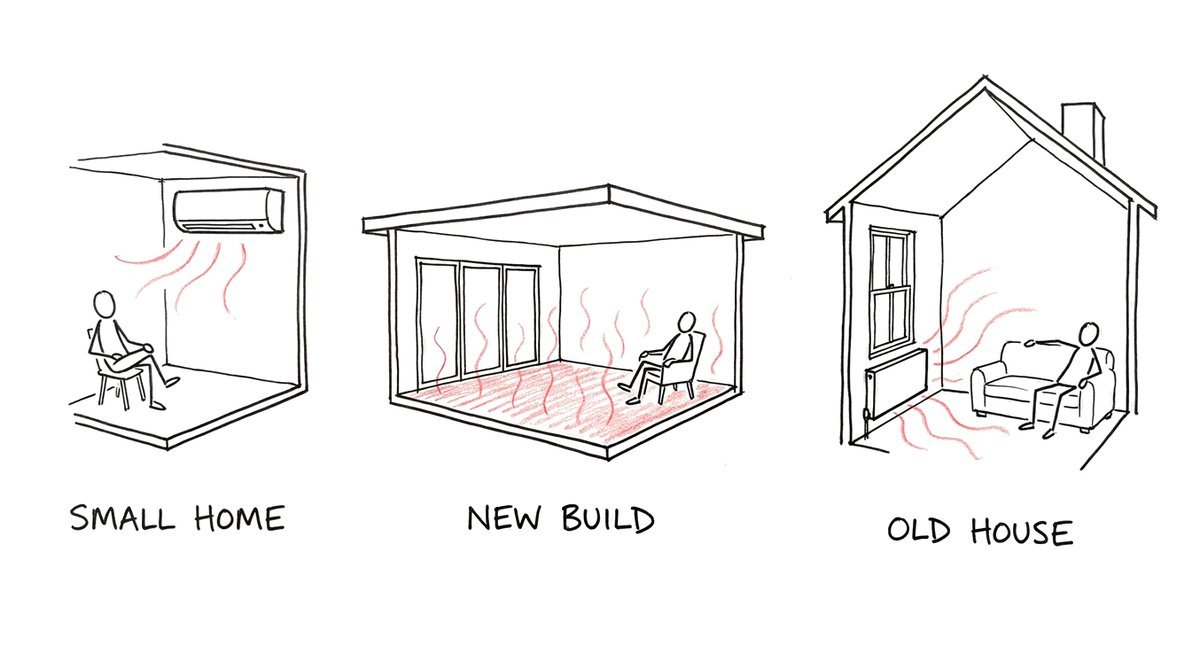
Ask five people how to heat and cool a house and you’ll usually get five answers, each one the thing that person sells. We design and install hydronic heating, so read our view with that in mind. We’ll also tell you where a reverse-cycle air conditioner is the better buy, because for plenty of Perth homes it is.
What does a Perth home actually need?
Two quite different things. Perth’s winter is short and mild on paper: the Bureau of Meteorology’s Perth station averages 8.1 degrees overnight in July and 18.5 in the afternoon. But the cold sits in the mornings and evenings from about May to September, when a house on a slab feels cold underfoot. Then summer brings long hot afternoons, so nearly every Perth home needs cooling as well as heating.
The house matters more than the machine. A well-insulated, well-shaded home needs far less heating and cooling than a draughty one with a wall of west-facing glass, and no heater fixes a house that leaks its heat. In older homes, Phil’s first advice is often to fix the gaps in the ceiling insulation and seal the old high wall vents before buying anything, because those steps alone can cut the heating a house needs dramatically. Then choose the system for the house that’s left.
The options side by side
| System | Good at | Watch out for |
|---|---|---|
| Reverse-cycle split system | Cheap to buy and run; heats and cools one room | Blown air; warmth gathers at the ceiling |
| Ducted reverse cycle | Heating and cooling for the whole house from one unit | Blown air and fan noise; loses heat into high ceilings |
| Gas heating | Quick heat where gas is already connected | Usually dearer to run than reverse cycle; no cooling |
| Hydronic floor heating | Even, silent warmth from the floor; no blown air | Decided before the slab is poured; a cheap build costs far more to run |
| Radiators | The same quiet warmth in an existing home, floors left alone | Every room must be sized properly; heating only |
| Evaporative cooling | Cheap cooling in dry heat | Cooling only; weak on humid days |
| Geothermal | Cheaper to run on the right site; nothing outside to hear | The ground connection, indicatively $30,000 to $150,000 |
Reverse-cycle air conditioning: the cheap, sensible default
Consumer group CHOICE puts it plainly: “air con is by far the cheapest way to heat your home”, and we agree it’s hard to beat on cost per unit of heat. A reverse-cycle air conditioner is a heat pump. It moves heat in from outside rather than making it, so each unit of electricity brings in several units of warmth, and the same box cools the house in summer. For a small, well-insulated home, a flat, or a couple of rooms you actually use, a good split system is often all you need.
Its weakness is that it heats the air. Warm air rises and gathers under the ceiling, the air down where you sit is the coolest in the room, and the walls and floor stay cold. Phil describes the strange experience most of us have had: the controller says 25 or even 28 degrees and you’re still cold. Ducted systems spread that across the whole house, with the fan noise and moving air that go with it, and in older homes with high ceilings much of the warm air ends up where nobody is.
Gas heaters, ducted or in the room, heat quickly, and plenty of older Perth homes still have them. For space heating, reverse cycle usually costs less to run, as CHOICE’s comparison shows. Plug-in electric heaters are the dearest way to heat for any length of time. In Phil’s example, a heat pump warms a whole house on roughly the power two oil-filled heaters use to warm two rooms.
Floor heating and radiators: when comfort is the goal
Hydronic heating warms the house with water instead of air. A heat pump outside heats water to well below the temperature of your hot tap, about 25 to 40 degrees for a floor and a little warmer for radiators, and that water runs through pipes in the floor or to slim radiators on the walls. Both warm you the way winter sun does, by radiation, so the room feels comfortable at a lower setting, with no air blowing and no noise.
In a new build with tiles or polished concrete, floor heating is about the most comfortable heat there is. Built right, a 200 m² Perth home runs at about $240 a winter month; built cheaply, the same floor costs about $601 (both modelled estimates at Synergy’s July 2026 rate). Designed properly, that puts it in the same league as a good reverse-cycle system, without the blown air. The catch is timing: almost everything that decides the running cost goes in before the slab is poured. We weigh it up honestly in is underfloor heating worth it in Perth.
In a house that’s already built, radiators bring the same kind of warmth from the wall, with nothing dug up, and they suit older Perth homes with high ceilings particularly well. We explain why in can you put underfloor heating into an existing home. Either way, the water can be heated by a heat pump or a gas boiler. We install both; on running cost a heat pump usually comes out ahead in Perth, so it’s what we suggest first, and if you’d rather have gas we’ll design around a gas boiler.
What about cooling?
On a hot Perth afternoon, reverse-cycle air conditioning is the workhorse. Evaporative coolers are still common here and cheap to run in dry heat, but they only cool, they add moisture to the air, and they do much less on humid days.
If you have hydronic floor heating, the same heat pump can cool the floor in summer, and it’s pleasant, quiet cooling. It covers only about a quarter of what a standard Perth house needs, so it works alongside air conditioning, never instead of it. The best arrangement we build runs the floor and the air conditioning from one heat pump, with the floor doing the background work and the air conditioning topping up. Can floor cooling replace air conditioning explains the limits.
Geothermal sits behind all of these as a choice of heat source rather than a separate system: the heat pump draws on the ground or Perth’s groundwater instead of the air. On our Perth projects it has run up to about 40% cheaper than air-source, but the heat pump costs about 20% more and the ground connection adds the cost in the table above. It pays where there’s a pool to take summer heat, a site that can’t have an outdoor unit, or good groundwater close at hand. On most suburban blocks, a good air-source heat pump is the better buy.
How do I choose, and what size do I need?
Start with how much heat your house loses on the coldest morning and gains on the hottest afternoon, room by room. That’s a heat-load calculation, and it’s worth more than any brochure, because a system sized off floor area alone is a guess. Too big and it switches on and off all day, wearing itself out and wasting energy at every start. Too small and it runs flat out and never quite gets there. What is a heat-load calculation explains what goes into one.
Efficiency labels help less than they seem to. A star rating or a heat pump’s efficiency figure tells you how one machine performs under test conditions, and it only means something compared with another machine tested the same way. It can’t tell you how the whole house will perform, because efficiencies multiply. Phil’s example: a heat pump running at 300% on a floor that delivers 80% of its heat gives you a 240% system, and the same heat pump on a badly built floor that delivers 50% gives you 150%. Same machine, very different bill.
For a hydronic quote, Phil has one test question: what’s the design temperature of the system water? A designer who knows the answer, and can tell you why it’s low, has done the calculation. If the answer is a shrug, or something like 65 or 70 degrees for a heat pump system, keep asking.
Other questions people ask us
Is hydronic heating cheaper to run than reverse cycle?
Per unit of heat, no, and we won’t pretend otherwise. Designed and built properly, it runs in the same league as a good reverse-cycle system, and its advantage is comfort: a warm floor, still air and no noise. Hydronic floor heating or ducted reverse cycle goes through it in detail.
Do I still need heating in a 7-star home?
Less of it, and that’s the point of the rating. A compact, well-insulated 7-star home may be comfortable with one or two split systems. Larger homes with hard floors and lots of glass can still feel cold on July mornings.
Can one system do the heating, cooling and hot water?
Yes. One heat pump can run the floor, the air conditioning, the hot water and even the pool. It costs more to design and build than separate machines, so it pays mainly in larger homes with a pool.
My old gas ducted heater has died. What should replace it?
Ducted reverse cycle is the straightforward swap, and it adds cooling. If you want quieter, more even warmth in an older or character home, radiators on a heat pump are the other road.
Where to go from here
If you’re building or renovating in Perth or the south-west, the 5-minute quote gives you your options in writing within 3 working days, each with its price and a modelled running cost, and you don’t need plans to start. If reverse cycle turns out to be the right answer for your house, we’ll say so. For heating, cooling and hot water designed as one job, read our page on whole-home systems.